
A lot of couples ask this the moment things don’t happen as quickly as expected. The honest answer is, stress alone rarely stops conception, but long stretches of it can disrupt the hormonal rhythm your body relies on for ovulation, and in men, it can gradually affect sperm production too.
Dr. Pooja Papishetty gets asked about this often in her consultations at Matrika Fertility and Laparoscopic Centre, a well known IVF centre in Kondapur, Hyderabad. Most couples trying to conceive are already carrying some pressure. Knowing where stress genuinely fits into the picture usually takes away a fair bit of that guesswork.
What's the Real Link Between Stress and Fertility?
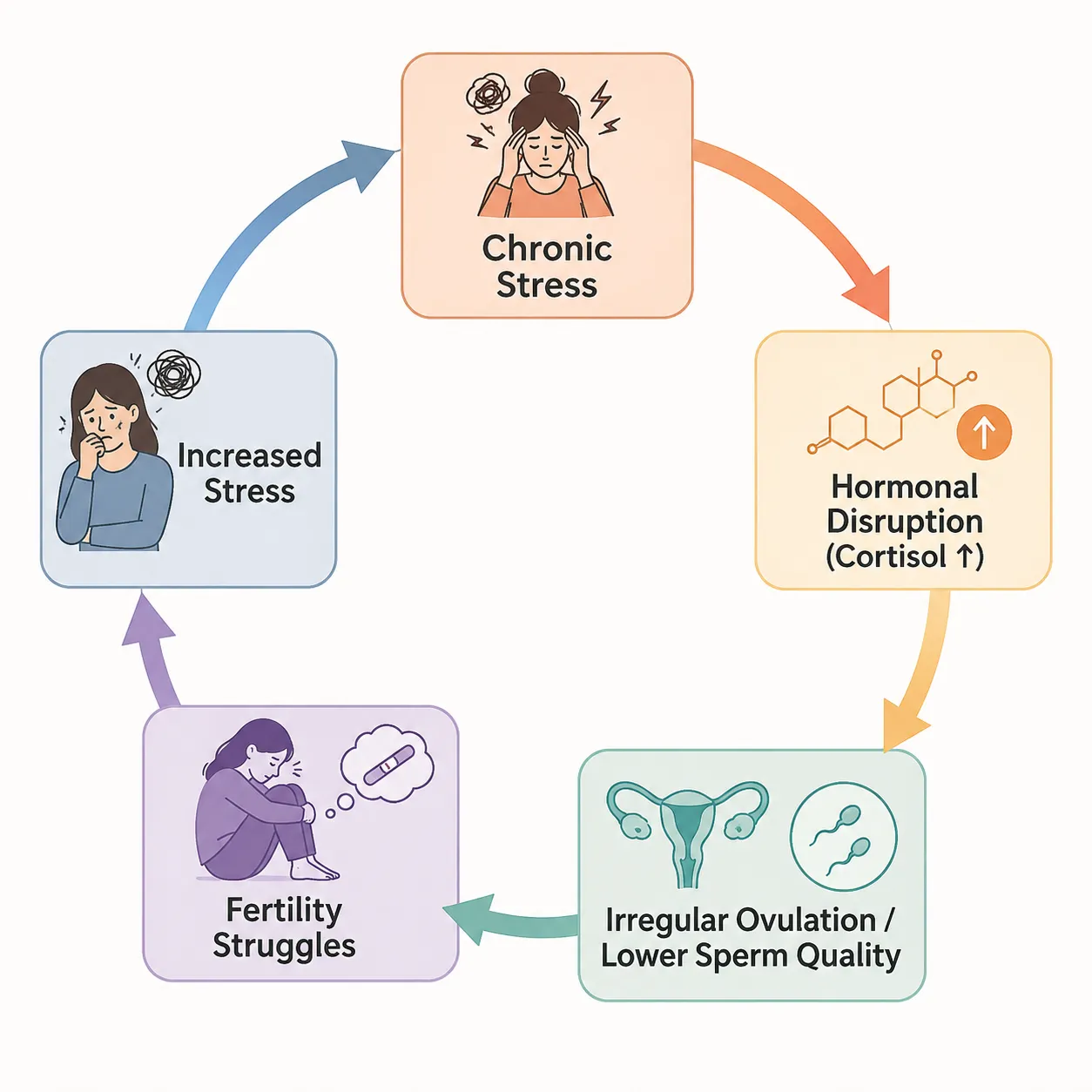
Researchers have looked into this for years. The answer isn’t simple. Stress alone rarely causes infertility. What it can do is disturb the hormonal balance behind regular ovulation. In some men, it slowly affects sperm production too.
There’s a flip side that gets mentioned less. Fertility struggles cause real stress, often a lot of it. That stress then makes the whole process feel heavier. It becomes a loop, and loops like this are hard to break without help.
How Stress Affects the Body's Reproductive Signals
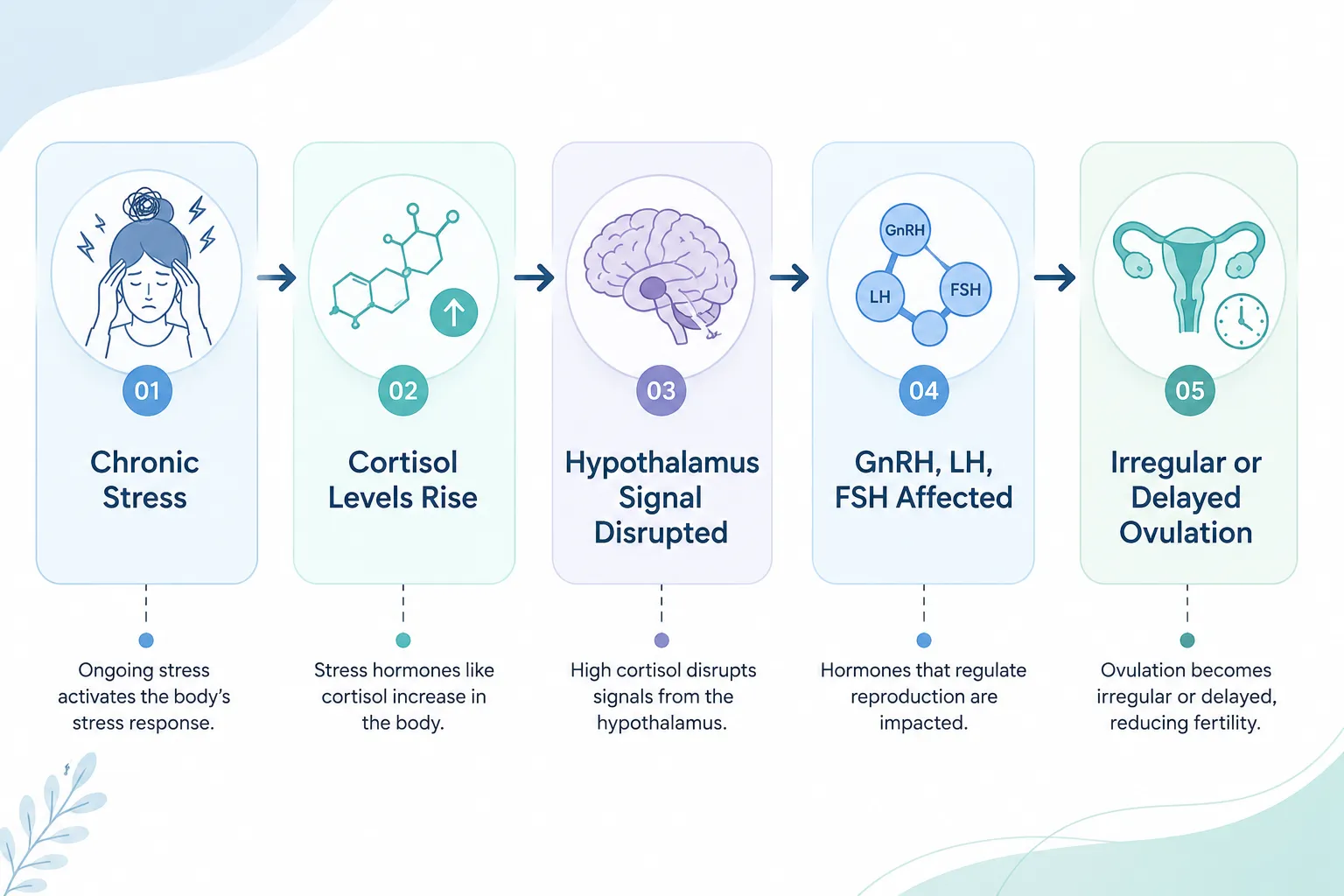
Here’s the basic mechanism. The stress response runs on cortisol. Keep cortisol high for too long, and it starts interfering with GnRH, LH, and FSH, the hormones that regulate ovulation. Some women notice irregular cycles because of this. Others notice ovulation arriving later than usual.
Men aren’t exempt either. Chronic stress has been linked to lower testosterone and weaker sperm quality in several studies. How much it affects any one person, though, varies a lot.
“Stress isn’t usually the single cause of infertility. But I wouldn’t call it irrelevant. The reproductive system and the stress response sit closer together than most people assume.”
– Dr. Pooja Papishetty, Fertility Specialist, Kondapur, Hyderabad
Does Stress Cause Infertility, or Just Make It Harder?
Most confusion starts here. Stress alone, even a lot of it, doesn’t usually cause infertility the way endometriosis or a low sperm count does. What it does instead is make an already sensitive system less predictable. Mostly around ovulation timing.
For most couples, working on stress alone won’t fix a real underlying issue. But for couples with no diagnosed cause, getting stress under control can help cycles settle. That alone sometimes makes conception a bit easier.
Signs Your Stress Levels Might Be Affecting Your Cycle
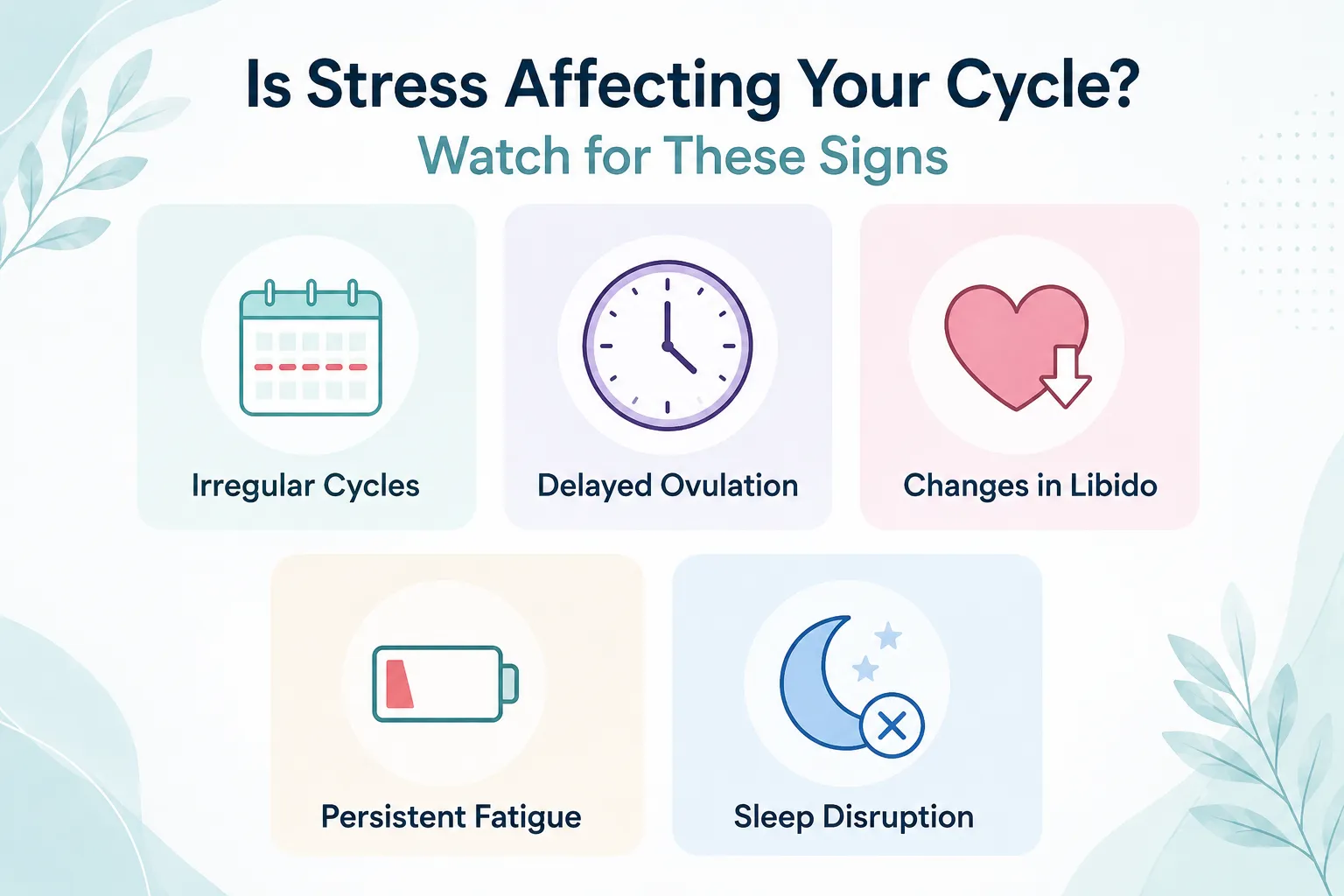
Watch for these, especially during stretches of high stress.
- Cycles that turn irregular after being steady for a while
- Ovulation running later than usual, or skipping some months
- Noticeable shifts in libido
- Fatigue that doesn’t lift, even with rest
- Trouble sleeping, which throws hormone regulation off further
None of these confirm stress is the cause by themselves. Still worth mentioning at your next visit.
What Actually Helps With Stress While Trying to Conceive
“Just relax” helps nobody. Most couples trying to conceive have heard that line too many times. A few things do tend to help.
- Moderate exercise. Not extreme. Overtraining adds its own stress
- Consistent sleep. Poor sleep throws off hormones too
- Breathing exercises, done regularly, not just when things feel bad
- A counsellor, ideally one who understands fertility-related stress
- Less caffeine and alcohol
- Real support. A partner, close friends, or a support group
Which one could actually fit your week? Small, steady changes tend to stick better than big ones that fade after two weeks.
When It's Time to See a Fertility Specialist
Over a year of trying with no success? Six months if you’re above 35? Get evaluated, regardless of how big a role stress feels like it’s playing. Managing stress shouldn’t be the reason a proper work-up gets delayed. Something else could be going on that needs separate attention.
Dr. Pooja often combines both. Lifestyle factors alongside a full fertility evaluation, not one instead of the other.
If a medical cause turns up, IUI treatment or IVF treatmentnmay come up next, depending on the findings.
Frequently Asked Questions
Can reducing stress alone get me pregnant?
For some couples with no underlying cause, yes, it can help regulate cycles. Not guaranteed though. It shouldn’t replace an evaluation if you’ve been trying a while.
Does stress affect men's fertility too?
Yes. Chronic stress has been linked to lower testosterone and weaker sperm quality in some studies. It plays out differently for each person.
How fast can stress affect a cycle?
Varies a lot. Some women notice a shift within one or two cycles. Others notice nothing, even during genuinely stressful periods.
Should I deal with stress before seeing a fertility doctor?
No. If it’s been over a year, get evaluated alongside managing stress, not instead of it.
Does therapy actually help?
Many patients say yes, especially with a counsellor who works specifically with fertility-related stress. The emotional weight of trying to conceive gets underestimated often.