
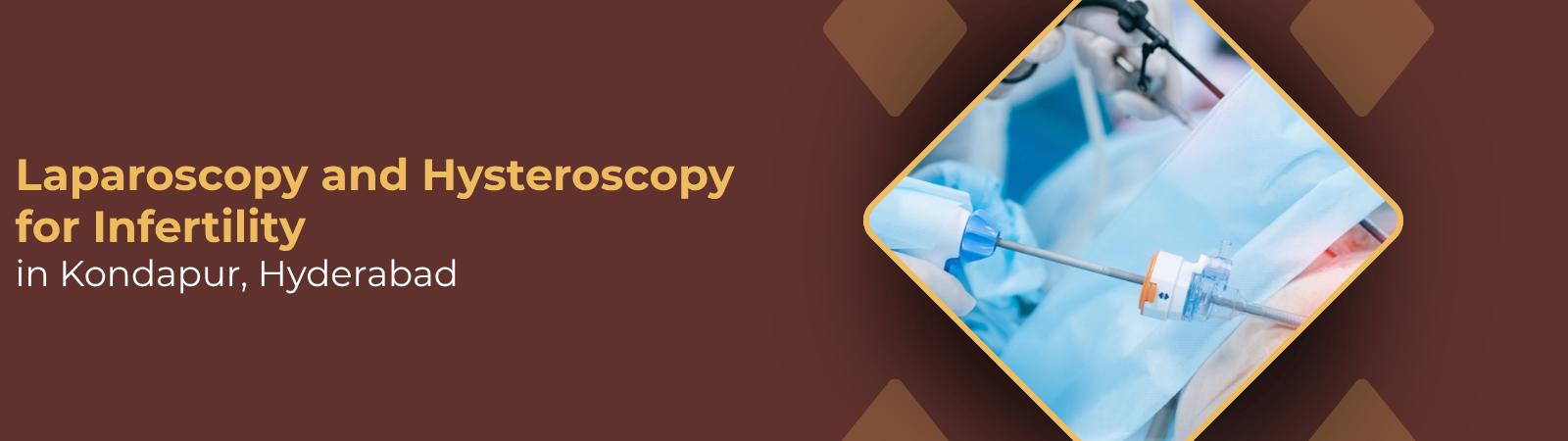
Laparoscopy and Hysteroscopy for Infertility in Kondapur, Hyderabad
Laparoscopy and hysteroscopy are two minimally invasive surgical procedures used to find and treat the hidden reasons behind infertility. At Matrika Fertility and Laparoscopic Centre, the leading IVF centre in Kondapur, Hyderabad, both procedures are routinely performed to check the uterus, fallopian tubes, ovaries, and pelvic area for conditions that may be stopping a woman from conceiving.
Many couples go through repeated failed cycles without knowing the real cause. Dr. Pooja Papishetty, uses these two scopes to actually look inside the reproductive organs, instead of guessing from scans alone. Issues like fibroids, blocked tubes, endometriosis, ovarian cysts, uterine adhesions, and septum inside the uterus often show up only through this kind of direct view.
The good news is that the same surgery used to find the problem is also used to fix it. That makes laparoscopy and hysteroscopy one of the most useful steps before starting IVF or any other fertility treatment.
“Many of our patients have spent years on fertility treatments without anyone checking the uterus and tubes from the inside. Once we do a laparoscopy and hysteroscopy, the missing piece often becomes clear. That single step changes the outcome for a lot of couples.” – Dr. Pooja Papishetty, Fertility & Laparoscopic Specialist, Matrika Fertility and Laparoscopic Centre, Kondapur, Hyderabad
Worried about an unknown cause of infertility?
What is Laparoscopy and Hysteroscopy Treatment?
Laparoscopy and hysteroscopy are two separate but often combined keyhole procedures used in modern fertility care.
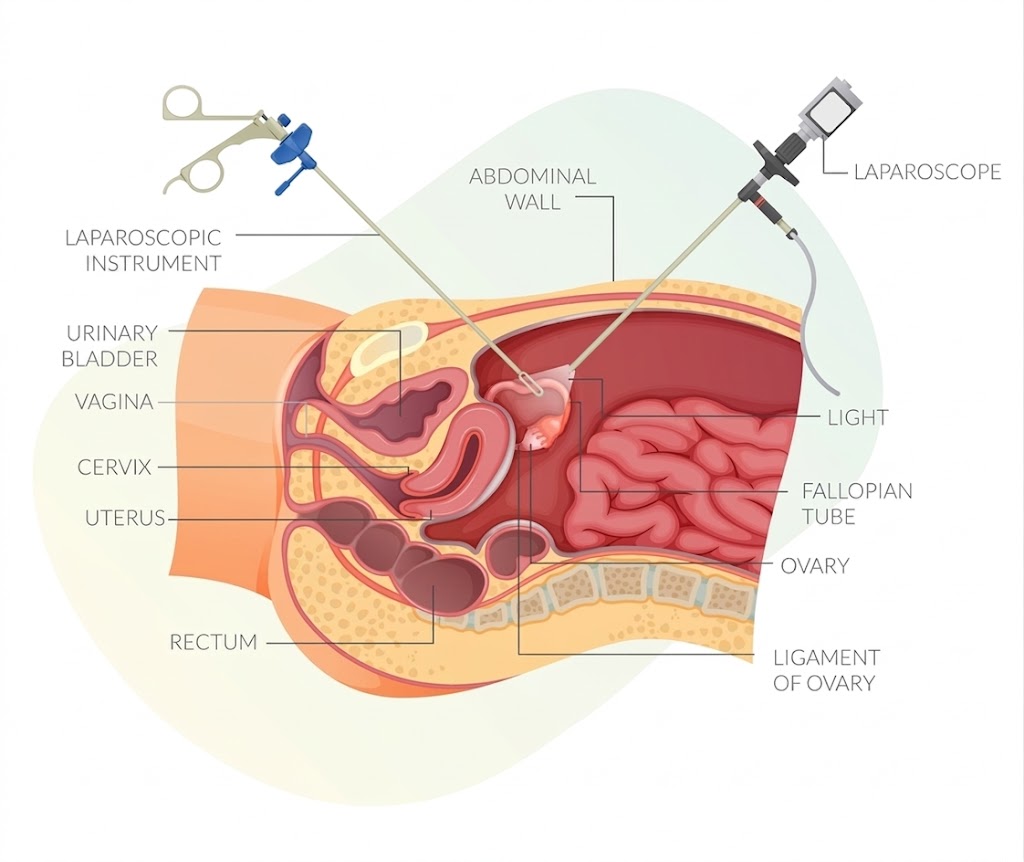
Laparoscopy
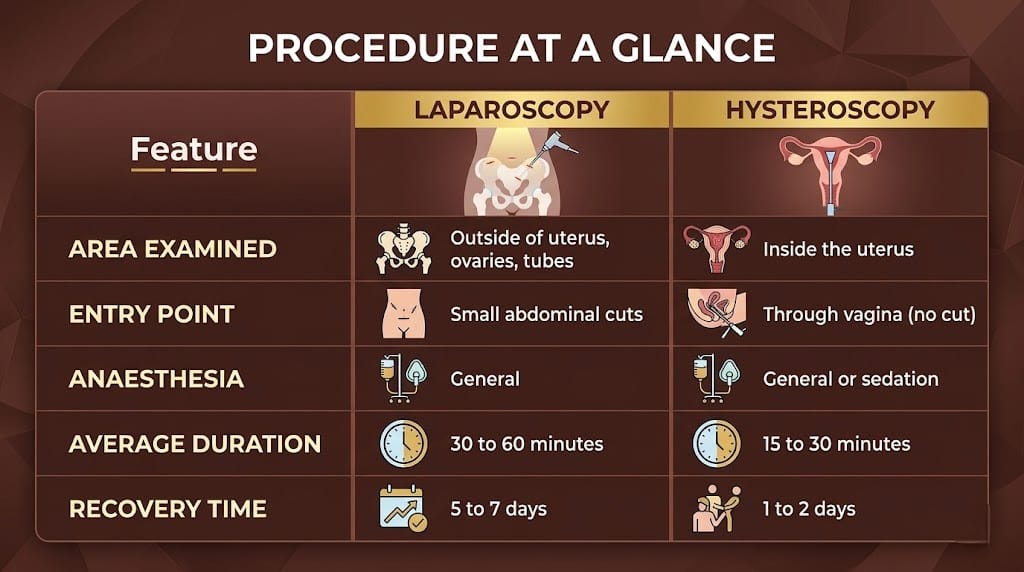
is a procedure where a thin tube with a camera (called a laparoscope) is passed through a small cut near the belly button. This lets the surgeon see the outside of the uterus, both ovaries, the fallopian tubes, and the pelvic lining on a screen.
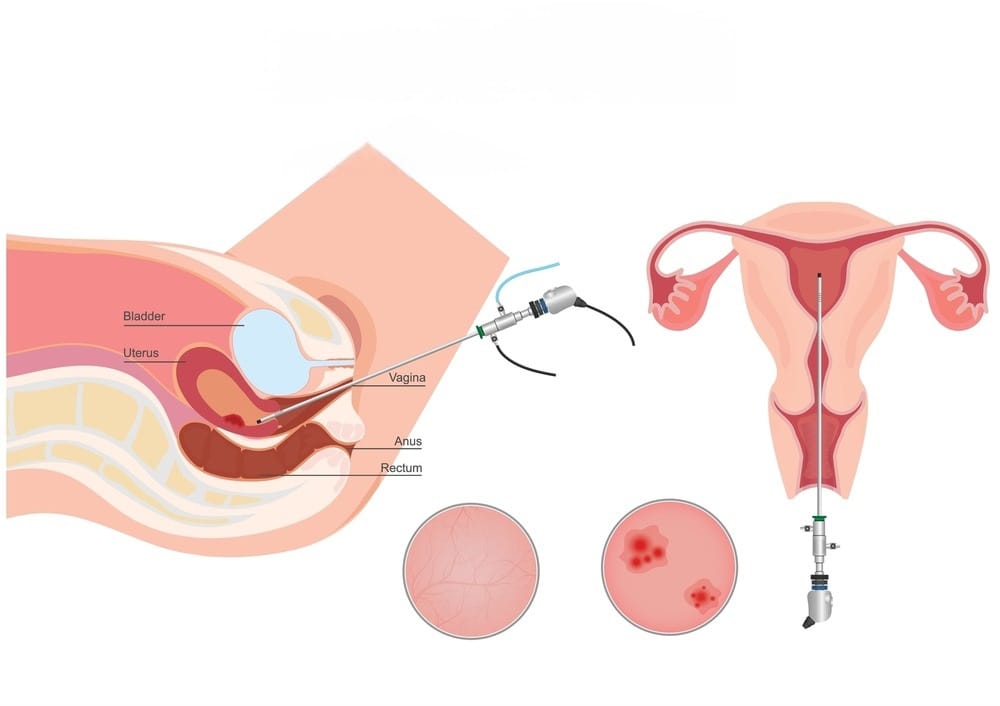
Hysteroscopy
is a procedure where a thin scope is passed through the vagina and cervix into the uterus. No cut is needed. The doctor sees the inside of the uterine cavity in real time.
Together, these two scopes give a complete view, outside and inside, of the female reproductive system. Most fertility clinics offering both procedures use them either to confirm a suspected problem or to treat it in the same sitting.
Who Needs Laparoscopy and Hysteroscopy Treatment?
This combined procedure is usually recommended when basic fertility tests do not give a clear answer, or when scans hint at a structural problem. Dr. Pooja Papishetty may suggest it in the following situations:
Fibroids and polyps inside the uterus
non-cancerous growths that change the shape of the uterus and make it hard for an embryo to implant.
Endometriosis
Endometriosis – when tissue similar to the uterine lining grows outside the uterus, causing pain and reduced fertility.
Uterine adhesions (Asherman’s syndrome)
scar tissue inside the uterus, often from past D&C or infection, that thins the lining.
Blocked fallopian tubes
Blocked fallopian tubes – when the egg cannot meet the sperm because the tubes are closed, swollen with fluid (hydrosalpinx), or scarred.
Ovarian cysts
fluid-filled sacs on the ovaries that may affect egg release and hormone balance.
Septum inside the uterus
a wall of tissue dividing the uterine cavity, linked to repeated miscarriage.
Other common reasons include unexplained infertility, repeated IVF failure, recurring pregnancy loss, and severe period pain that points to a pelvic cause.
How is Laparoscopy and Hysteroscopy Performed? Step by Step
The full procedure is done under general anaesthesia and usually takes 30 to 90 minutes, depending on what is being treated.

Step 1 - Pre-surgery check-up
Blood tests, scans, and an anaesthesia review are done a few days before. Patients are asked to fast for 6 to 8 hours before surgery.
Step 2 - Anaesthesia
The patient is put under general anaesthesia in the operation theatre. No pain is felt during the procedure.
Step 3 - Hysteroscopy first
A thin scope is passed through the vagina into the uterus. The cavity is gently filled with sterile fluid so the doctor can see the lining clearly. Polyps, septum, or adhesions are treated right then.
Step 4 - Laparoscopy next
Two or three small cuts (around 5 to 10 mm) are made on the abdomen. The laparoscope and surgical tools are passed in. The doctor checks the ovaries, tubes, and pelvis. A dye test (chromopertubation) is often done to check if the tubes are open.

Step 5 - Treatment in the same sitting
If fibroids, cysts, endometriosis patches, or scar tissue are found, they are removed during the same surgery. This saves the patient a second operation.

Step 6 - Recovery
Most patients go home the same day or the next day. Mild cramping and shoulder pain are common for 1 to 2 days. Normal activities can be resumed within a week.
Most patients go home the same day or the next day. Mild cramping and shoulder pain are common for 1 to 2 days. Normal activities can be resumed within a week.
“In many cases of so-called ‘unexplained infertility’, we find a clear cause the moment we do a laparoscopy. A small fibroid, a band of scar tissue, mild endometriosis. These do not always show on ultrasound, but they matter for pregnancy.” – Dr. Pooja Papishetty, Matrika Fertility and Laparoscopic Centre, Kondapur, Hyderabad
Laparoscopy & Hysteroscopy vs IVF - How They Work Together
This is not really a comparison of two competing treatments. Laparoscopy and hysteroscopy are diagnostic and corrective procedures. IVF is a fertility treatment. They often go hand in hand.
Point of difference | Laparoscopy & Hysteroscopy | IVF |
Purpose | Find and fix structural problems | Help fertilisation outside the body |
Type | Surgical procedure | Assisted reproductive treatment |
Done when | Suspected fibroid, endometriosis, blocked tube, septum, adhesions | Tubal block, low sperm count, age factor, failed IUI |
Time taken | One day procedure | One full cycle of about 4 to 6 weeks |
Anaesthesia | General | Only for egg retrieval |
Often advised before IVF? | Yes, if scans suggest a uterine or pelvic issue | – |
Many patients at the IVF centre are advised laparoscopy or hysteroscopy before starting IVF. Fixing a fibroid, septum, or hydrosalpinx first improves the chance of embryo implantation and reduces the risk of IVF failure.
Laparoscopy and Hysteroscopy Success Rate - What You Should Know
Success here is measured in two ways: how well the problem is corrected, and how much it improves the chance of pregnancy afterwards.
Removal of polyps and small fibroids by hysteroscopy
is linked to a noticeable rise in natural conception and IVF implantation rates.
Septum resection
is reported to improve live birth rates and reduce miscarriage in women who had repeated pregnancy loss.
Treatment of mild to moderate endometriosis by laparoscopy
has been shown to improve spontaneous pregnancy rates over the next 6 to 12 months.
Adhesiolysis for Asherman’s syndrome
restores the uterine cavity in most patients, though more than one procedure is sometimes needed.
Tubal surgery and ovarian drilling
can help select patients, but success depends on age, ovarian reserve, and sperm quality.
It is important to be honest about one thing. These procedures fix the structural cause. Age, egg quality, and sperm parameters still matter. That is why a personalised plan from an experienced IVF doctor is more useful than a one-size answer.
Laparoscopy and Hysteroscopy Treatment Cost in Kondapur, Hyderabad
The cost depends on what is being treated, how long the surgery takes, the hospital stay, and the anaesthesia type.
Approximate cost range in Kondapur, Hyderabad:
Procedure | Estimated cost range (INR) |
Diagnostic hysteroscopy only | ₹15,000 to ₹30,000 |
Diagnostic laparoscopy only | ₹35,000 to ₹60,000 |
Combined diagnostic laparoscopy + hysteroscopy | ₹50,000 to ₹85,000 |
Operative laparoscopy (fibroid, cyst, endometriosis) | ₹70,000 to ₹1,50,000 |
Operative hysteroscopy (polyp, septum, adhesions) | ₹40,000 to ₹80,000 |
The cost at Matrika Fertility and Laparoscopic Centre includes the procedure, anaesthesia, day care or short stay, basic medicines, and post-op review. Insurance coverage is available for many indications. The team helps with paperwork.
Get a clear answer about the cause of your infertility. Speak with the Matrika Fertility and Laparoscopic Centre team for a detailed evaluation.
Why Choose Matrika Fertility and Laparoscopic Centre?
Matrika is built around one idea. Find the real reason behind infertility before suggesting a treatment. As a trusted IVF centre in Kondapur, Hyderabad, the centre brings together fertility specialists, laparoscopic surgeons, and embryologists under one roof.
What makes Matrika Fertility and Laparoscopic Centre different:
- Both procedures in one sitting – saving time, money, and a second hospital admission.
- Experienced fertility-trained laparoscopic surgeons – not just general gynaecologists.
- Modern HD scopes and energy devices – better view, smaller cuts, faster healing.
- In-house IVF lab – so if treatment is needed after surgery, there is no delay.
- Patient-friendly billing – clear cost, no hidden charges.
- Located in Kondapur – easy reach from HITEC City, Gachibowli, Madhapur, and Kothaguda.
Pre-Treatment Tests Before Laparoscopy and Hysteroscopy
A few simple tests are done before the procedure to make sure surgery is safe and useful.
Test | Why it is done |
Complete blood count (CBC) | To check for anaemia and infection |
Blood sugar, kidney, liver tests | To assess fitness for anaesthesia |
HIV, Hepatitis B & C, VDRL | Routine pre-surgery screening |
Pelvic ultrasound | To map fibroids, cysts, and uterine shape |
Hormone profile (AMH, FSH, LH, TSH) | To check ovarian reserve and rule out hormonal issues |
Semen analysis (for partner) | To plan the full fertility approach |
ECG and chest X-ray | For anaesthesia clearance, especially after 35 |
The reports are reviewed by the fertility specialist before fixing the surgery date.
“Surgery alone is never the full plan. We always combine it with a fertility roadmap, whether that is timed intercourse, IUI, or IVF. The goal is a baby, not just a normal scan report.” – Dr. Pooja Papishetty, Matrika Fertility and Laparoscopic Centre, Kondapur, Hyderabad
Frequently Asked Questions
Is laparoscopy and hysteroscopy painful?
No. Both procedures are done under anaesthesia, so the patient does not feel any pain during surgery. Mild cramping and shoulder discomfort for a day or two after surgery is normal and goes away on its own.
How long is the recovery after laparoscopy and hysteroscopy?
Most women go back to light routine work within 5 to 7 days. Heavy lifting and exercise are advised after 2 to 3 weeks. Hysteroscopy alone has a faster recovery, usually within 1 to 2 days.
Can I get pregnant naturally after laparoscopy and hysteroscopy?
Yes, many women conceive naturally within 6 to 12 months after the corrective surgery, especially when the problem was a small polyp, mild endometriosis, or a uterine septum. The fertility specialist will advise the best window to try. Once you conceive, Dr. Pooja also offers high-risk pregnancy care for pregnancies that need extra monitoring.
Is laparoscopy needed before IVF?
Not for every patient. It is advised when scans suggest fibroids, hydrosalpinx, endometriosis, or when there have been repeated IVF failures. Fixing these first improves IVF success.
How safe is laparoscopy and hysteroscopy at Matrika Fertility and Laparoscopic Centre in Kondapur, Hyderabad?
Both are routine and very safe procedures when done by trained fertility laparoscopic surgeons. At Matrika Advanced Fertility, all procedures are done in a fully equipped operation theatre with anaesthesia support and post-op monitoring.
Ready to find the real cause of infertility? Book your consultation today.