

Male Infertility Treatment in Kondapur, Hyderabad
Fertility struggles are often assumed to be a woman’s issue to investigate first. But medically, that’s not accurate. In close to half of all infertility cases, male factors play a role too, sometimes on their own, sometimes alongside other issues.
If you and your partner have been trying to conceive without success, a fertility evaluation works best when it looks at both partners together, right from the start. At Matrika Fertility and Laparoscopic Centre, a IVF centre in Kondapur, Hyderabad, Dr. Pooja Papishetty offers a straightforward, comfortable evaluation for male fertility as part of that process. Many men feel a bit unsure walking in for this the first time, which is completely normal. Her clinic is set up to make the process simple and easy to understand.
“There’s a stigma around male infertility that it really doesn’t deserve. Half the time it’s something a medication or a lifestyle tweak can fix. But you won’t know until you test. That’s the step most men keep putting off. “
Dr. Pooja Papishetty, Gynaecologist and Fertility Specialist, Kondapur, Hyderabad
Stop wondering and start knowing. One semen test tells you more than a year of guessing ever will.
What Exactly Is Male Infertility?
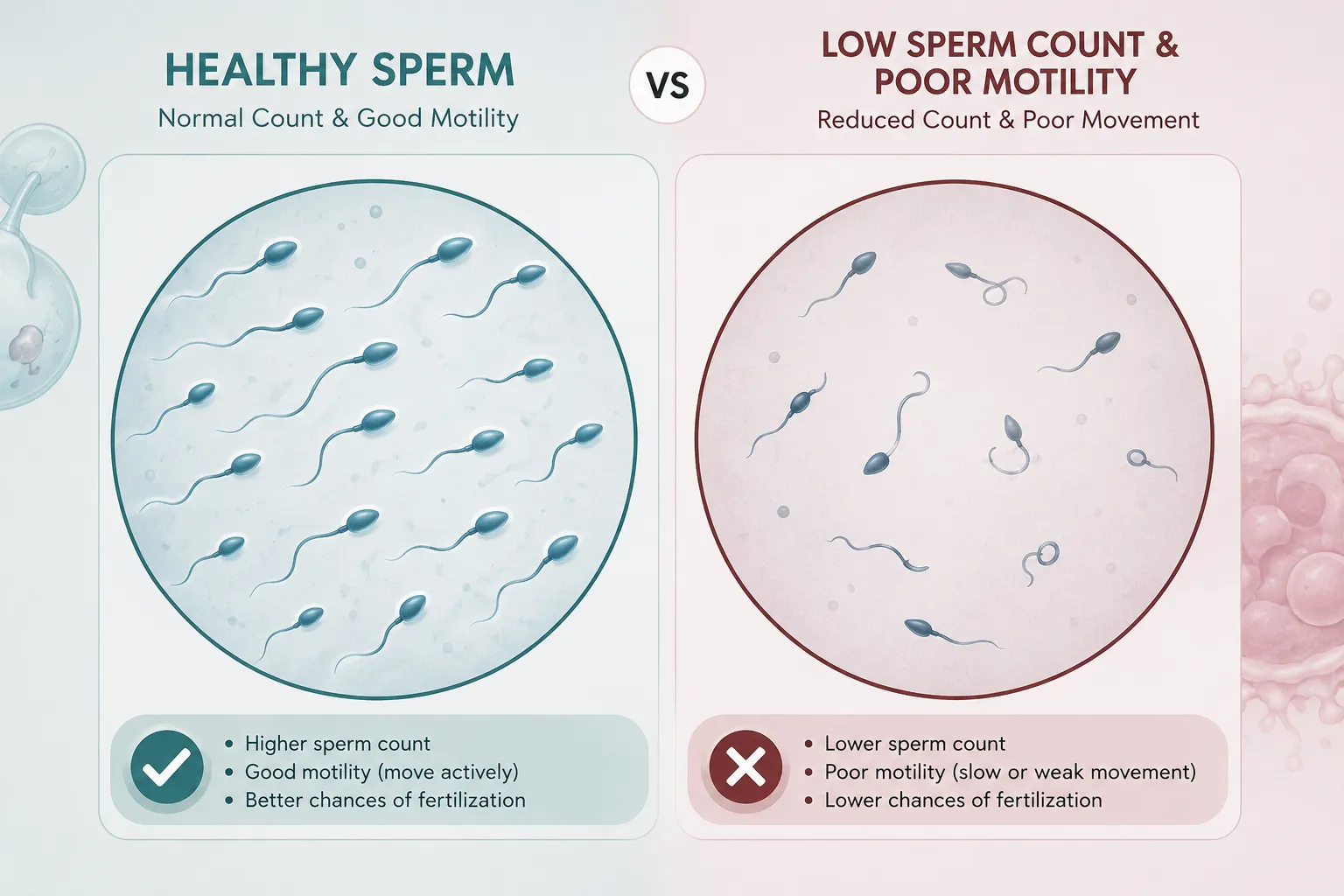
Male infertility refers to a condition where male reproductive factors are contributing to a couple’s difficulty in conceiving, despite a year of regular, unprotected intercourse.
In most cases, this involves one or more specific factors: a low sperm count, poor sperm motility, abnormal sperm shape, or in some cases, a complete absence of sperm in the ejaculate due to a blockage.
Dr. Pooja begins nearly every evaluation with a semen analysis. It is a simple, non-invasive test, and in most cases, it gives her enough information to identify what’s going on and plan the right next steps.
Who Actually Needs This Check-Up?
If a couple has been trying to conceive for over a year without success, evaluating both partners together, not just one, gives a faster answer. Dr. Pooja recommends a male fertility check for a few specific situations too.
A childhood history of undescended testicles matters, and so does mumps after puberty, which surprises a lot of men when they hear it can affect fertility later. A known or suspected varicocele is worth flagging as well, since it happens to be one of the more treatable causes. So is an existing hormone condition, or a history of chemotherapy, radiation, or long-term medication.
Daily habits count too. Long hours of sitting or regular heat exposure at work can quietly affect sperm health over time.
One case comes up often: the female partner’s tests are all normal, but the male side hasn’t been checked yet. Here, a semen analysis is usually the right next step. It’s simple and affordable, and it often fills in the missing piece.
What's Actually Causing It
Getting to the exact cause matters, because it decides the treatment. Dr. Pooja spends real time on this in the first visit, not a quick five minutes. Broadly, three things tend to be at play, and honestly, they usually overlap.
Sperm Quality Itself
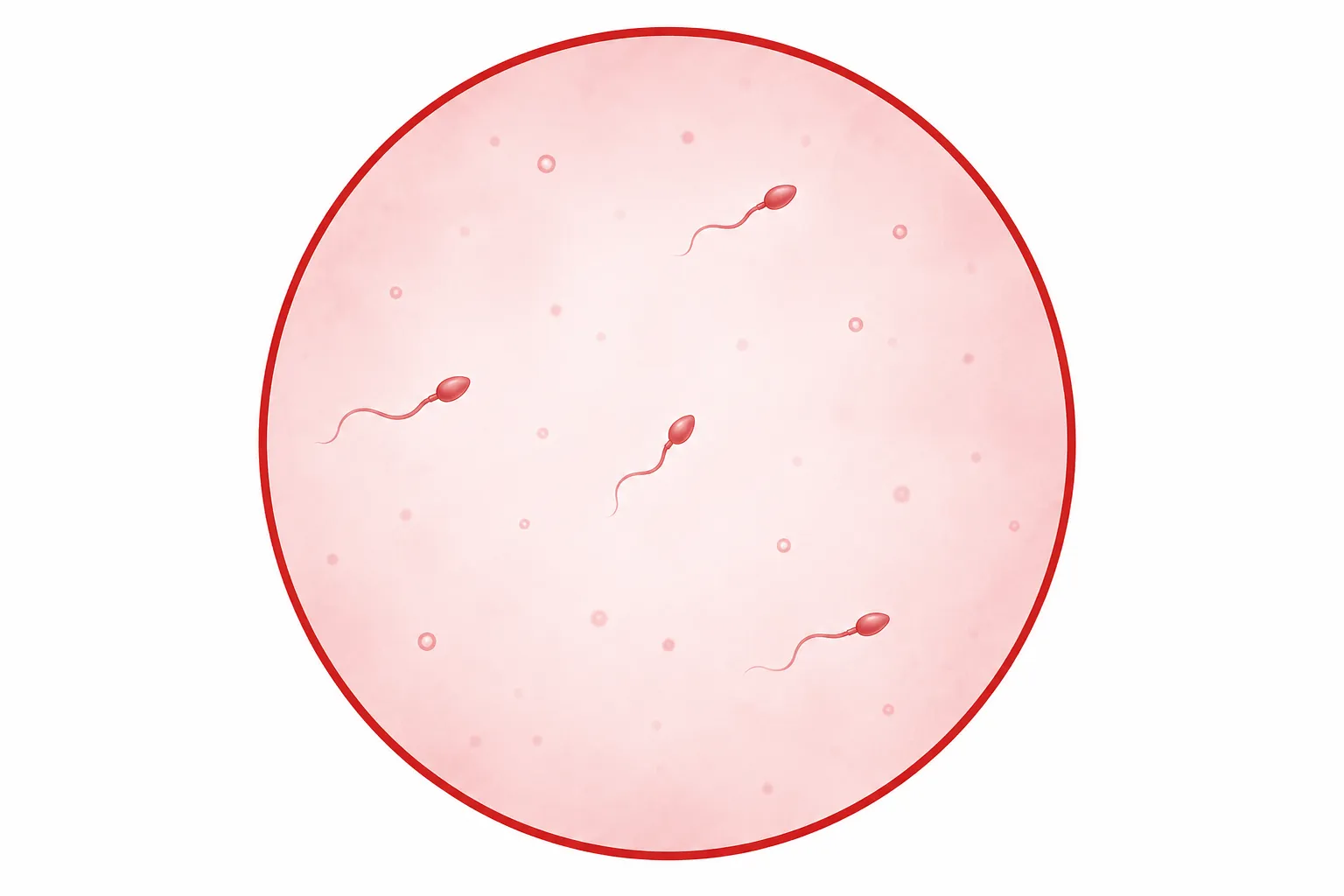
Sometimes it’s the count that’s low, oligospermia is the term for that. Sometimes the sperm are there but not moving well, which is motility. Shape can be off too, teratospermia, or in more serious cases, there’s no sperm in the sample at all. That’s azoospermia, and it sounds scarier than it usually turns out to be.
Something Physical or Medical Going On
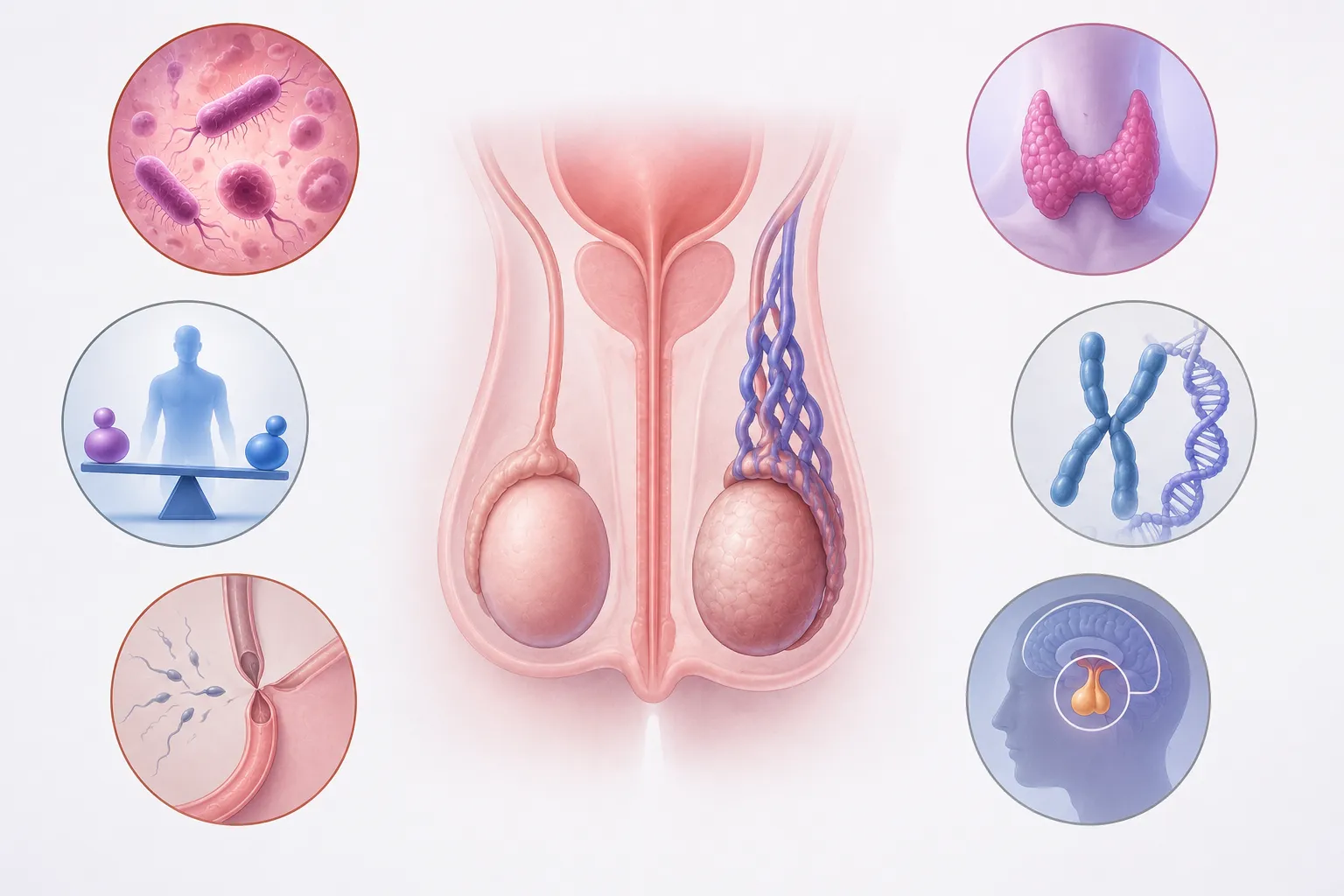
A varicocele shows up more than anything else on this list, and it happens to be one of the easier things to actually fix. Beyond that there’s infection, hormone issues like low testosterone or thyroid trouble, a physical blockage somewhere along the line, or in rarer cases a genetic condition such as Klinefelter syndrome.
Everyday Habits and Environment

This part surprises people. Smoking and heavy drinking obviously don’t help. Neither does carrying a lot of extra weight, or stress that never really switches off. Heat is a bigger factor than most expect too, hot tubs, a laptop resting on the lap for hours, even underwear that’s too tight. Certain medications and steroid use round out the list.
Most of the time it isn’t just one of these on its own. It’s usually two or three together, which is why Dr. Pooja keeps digging even after finding the first answer.
How Treatment Actually Works, Step by Step

Step 1 – A Conversation First, Then an Exam
Every case starts the same way, with a conversation. Dr. Pooja goes through medical history, daily habits, past surgeries, any tests already done elsewhere. Then comes a physical exam. It sounds basic, but it’s often enough on its own to pick up something like a varicocele before any lab work even happens.

Step 2 – Semen Analysis
This is where most of the real information comes from. The lab looks at count, motility, and shape, the three things that matter most. One thing worth knowing: sperm quality isn’t fixed day to day, it shifts a bit on its own. So if Dr. Pooja asks for a second sample two or three weeks later, that’s normal, not a red flag.

Step 3 – Digging Further If Something's Off
Not every case needs this step, but when the first result raises a question, more testing follows. That could mean blood work for testosterone, FSH, and LH. It could mean a scrotal ultrasound to look for a blockage or varicocele. In a smaller number of cases, genetic testing gets added too.

Step 4 – A Plan That Fits What's Actually Wrong
Once the cause is clear, the options get narrower and more specific. Depending on what’s found, this might include:
- Lifestyle changes such as quitting smoking, cutting back on alcohol, or losing weight
- Medication, which could be antioxidant support like CoQ10, zinc, or L-carnitine, Clomiphene Citrate for hormone support, or antibiotics if there’s an infection involved
- Varicocelectomy, a minor surgical fix for a varicocele
- Sperm retrieval procedures like TESA or PESA, usually for azoospermia, generally paired with ICSI
- Assisted reproduction such as IUI treatment for milder cases, or ICSI treatment when sperm count or quality is more significantly affected
“There’s no single fix that works for every man. What helps one patient may do nothing for another. That’s why the diagnosis has to come first, every time.”
– Dr. Pooja Papishetty, Matrika Fertility and Laparoscopic Centre, Kondapur
So What Are the Actual Chances?
Honestly, this varies so much by cause that any flat percentage online isn’t worth much. Still, a rough sense helps.
Fix a varicocele, and semen quality usually starts improving somewhere between 3 and 6 months out. Hormonal treatment tends to show something around the three month mark. For milder cases, IUI alone often does the job. When the sperm issue is bigger, ICSI is usually the answer, and it’s worked even in cases where the count was quite low to begin with. Azoospermia sounds like a dead end, but it often isn’t. Sperm can be retrieved surgically in many of these cases, then used with ICSI, and that’s worked for a good number of men.
Dr. Pooja won’t hand you a number before she’s actually looked at your reports. What she’ll give you instead is something grounded in your specific case, not a stat pulled off some website.
Numbers online won’t tell you your odds. Your reports will. Sit down with Dr. Pooja and find out where you really stand.
Why People Choose Matrika for This
Both partners are evaluated together, under one doctor, so there’s no need to piece together answers across different clinics. Dr. Pooja holds a Fellowship in Reproductive Medicine from Chandigarh, which means this is her actual area of specialised training, not something added on to a general practice.
Consultations are kept private and comfortable, something Dr. Pooja pays close attention to given how personal this evaluation can feel. Semen analysis is done in-house, which cuts down on the back and forth of waiting on outside labs. The clinic is located right in Kondapur, making it an easy visit for patients coming from Madhapur, Gachibowli, Kothaguda, or Manikonda. Costs are explained clearly during the visit itself, well before any treatment begins.
“Most men expect the worst when they come in. More often than not, it’s something manageable. Sometimes it really is just a habit that needs adjusting, nothing more complicated than that.”
– Dr. Pooja Papishetty, Fertility Specialist, Kondapur, Hyderabad
Tests Used to Get to the Bottom of It
| Test | What It Tells Us |
| Semen Analysis | Sperm count, movement, shape |
| Hormonal Panel (Testosterone, FSH, LH) | Whether hormones are behind low production |
| Scrotal Ultrasound | Checks for varicocele or blockages |
| Sperm DNA Fragmentation Test | Genetic quality, useful after repeated IUI or IVF failure |
| Genetic Testing | Looks for inherited causes in very low or absent counts |
Questions Men Actually Ask
Can this be fully treated?
Often, yes. Varicocele, infections, hormone imbalances, all of these usually respond well. Even in tougher cases like azoospermia, surgically retrieved sperm used with ICSI has worked for a lot of men wanting biological children.
What's a normal sperm count anyway?
Around 15 million per millilitre or above is generally considered normal. But count alone doesn’t tell the whole story, motility and shape matter just as much, which is why the full report matters more than any single number on it.
Does male infertility automatically mean IVF or ICSI?
Not even close. Plenty of men do fine with lifestyle changes, medication, or a minor fix like varicocele correction. IVF or ICSI usually only enters the picture once simpler options haven’t worked.
Do lifestyle changes really move the needle?
They can, and often do. Quitting smoking, drinking less, losing some weight, managing stress, cutting down on heat exposure, these have improved sperm quality for a lot of men within a few months.
Where does diagnosis actually begin?
Always with a semen analysis. From there, depending on what it shows, Dr. Pooja might add hormone tests, an ultrasound, or genetic testing to narrow things down further.
The awkward part is thinking about it. The easy part is the actual test. Take the easy part first.