Cosmetic gynaecology and women's wellness treatment at Matrika Advanced Fertility and Laparoscopic Centre in Kondapur, Hyderabad

Uterine Conditions Treatment in Kondapur, Hyderabad (Fibroids, Polyps and Septum)

Fibroids, polyps and a uterine septum are structural problems of the uterus. Most of them can be treated with medicines, a short hysteroscopy, or laparoscopic surgery, depending on their size, your symptoms, and your plans for pregnancy.

At Matrika Fertility and Laparoscopic Centre, a trusted IVF centre in Kondapur, Hyderabad, we diagnose and treat these conditions under one roof. Dr. Pooja Papishetty, an IVF doctor in Kondapur, Hyderabad, with fellowship training in reproductive medicine, plans every case around two questions. What is causing your symptoms, and how will it affect your chances of conceiving?

Many women ignore heavy periods or spotting for years. Others find out about a fibroid or polyp only after a miscarriage or a failed fertility cycle. Either way, the earlier you get a proper scan, the more options you have.

“Not every fibroid or polyp needs surgery. But every one of them needs a proper look before we decide that “ 

Dr. Pooja Papishetty, Gynaecologist and Fertility Specialist, Kondapur, Hyderabad

Holding a scan report you can’t make sense of? Get clarity and explore the right next steps with uterine conditions treatment in Kondapur, Hyderabad.

What Are Uterine Conditions?

Uterine conditions are changes in the shape, wall, or lining of the uterus. Some grow over time. Others are present from birth. The three most common ones we see are fibroids, endometrial polyps, and a uterine septum.

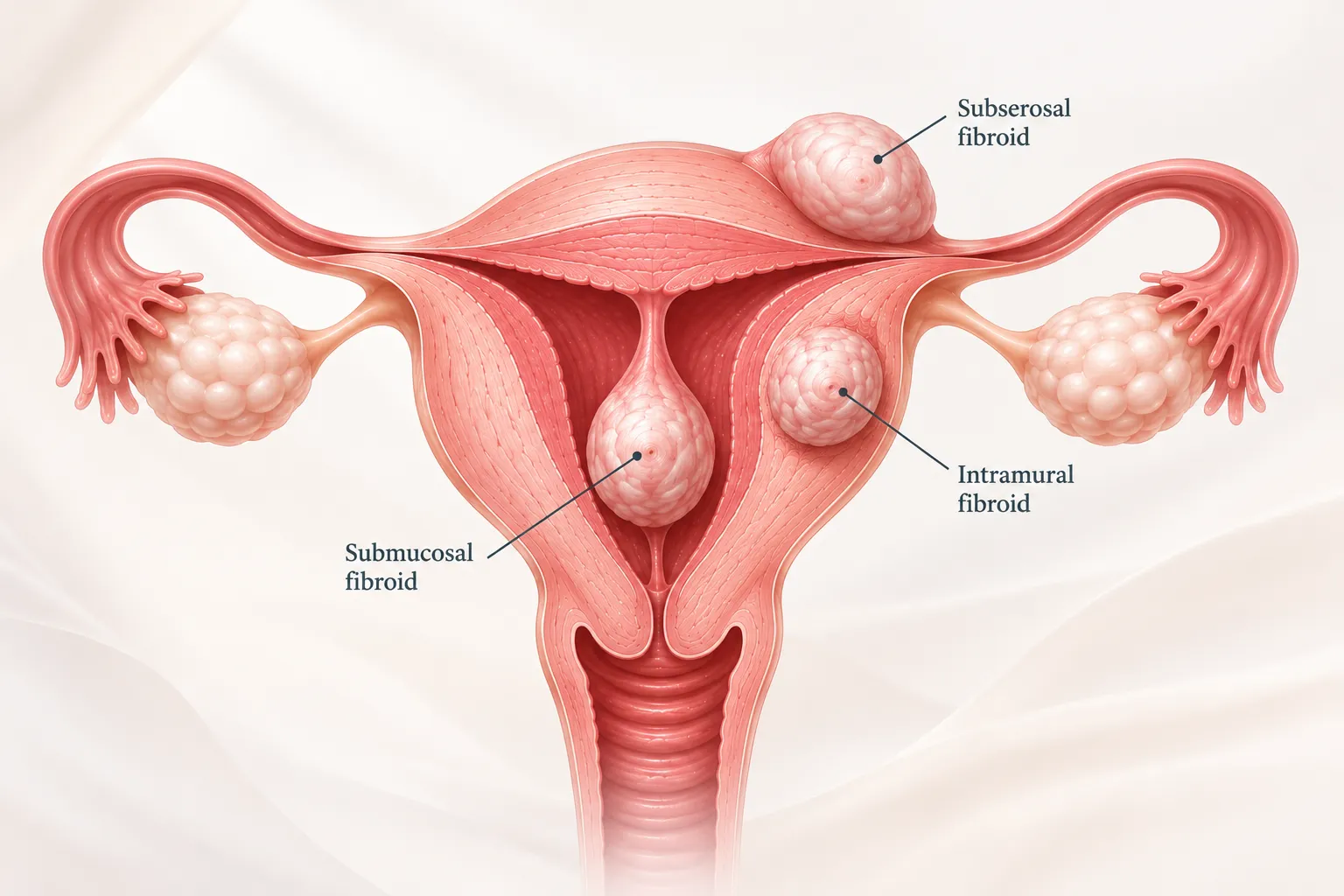
Uterine Fibroids

Illustration of several sperm cells swimming toward a large pink egg cell, illustrating fertilization.
Fibroids (also called myomas or leiomyomas) are non-cancerous growths of muscle tissue in the uterine wall. They can be as small as a pea or as large as a grapefruit. Their location matters more than their size. A small fibroid inside the uterine cavity can cause more trouble than a large one on the outer wall.

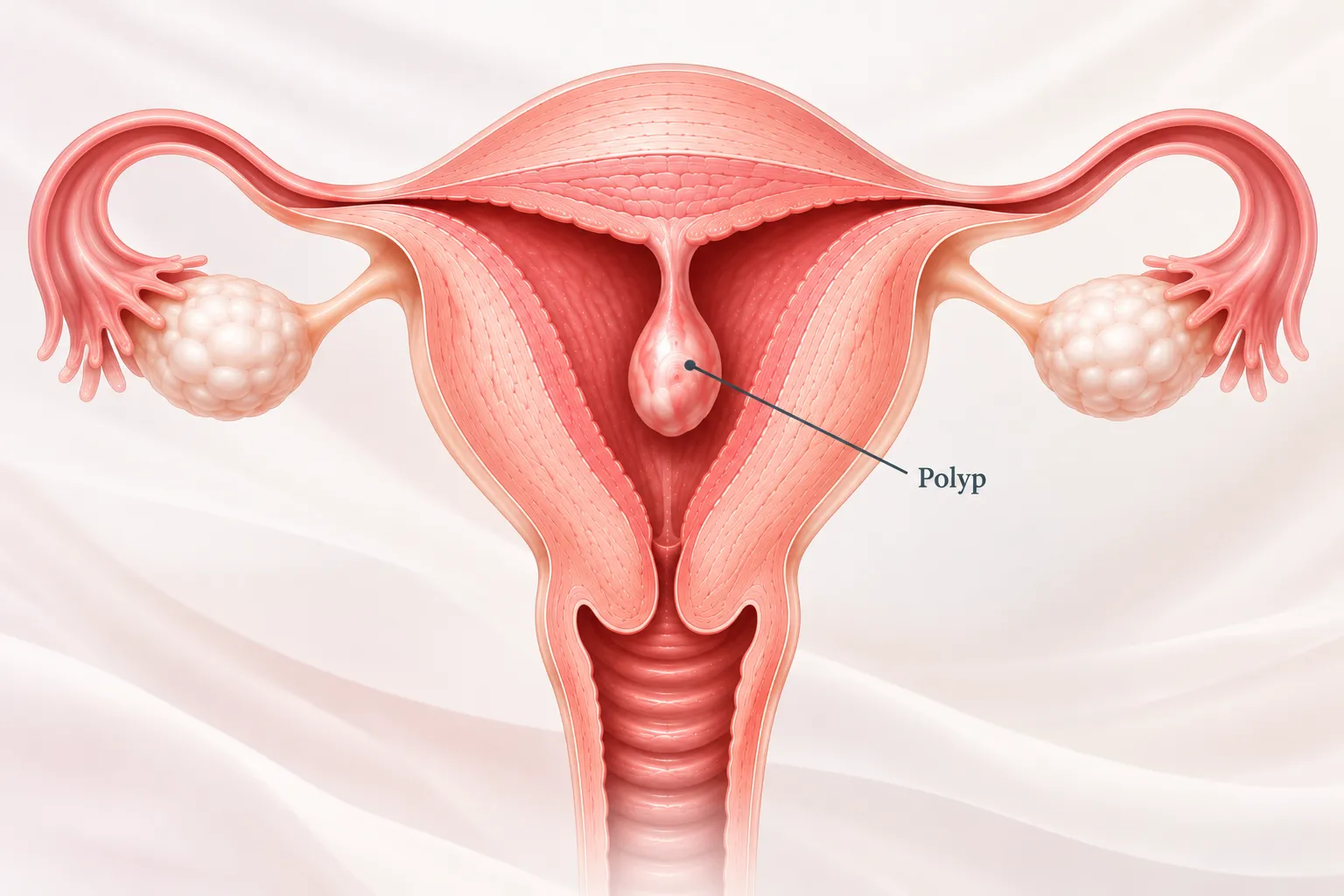
Endometrial Polyps

Central diagram of the male reproductive system showing both testicles and the vas deferens coming from the scrotum, with surrounding anatomy visible.
Uterine polyps are soft, finger-like growths that develop on the inner lining of the uterus. They are usually benign, but they can still cause symptoms such as spotting between periods or heavier menstrual bleeding. In some cases, they may also affect embryo implantation and make it harder to conceive.

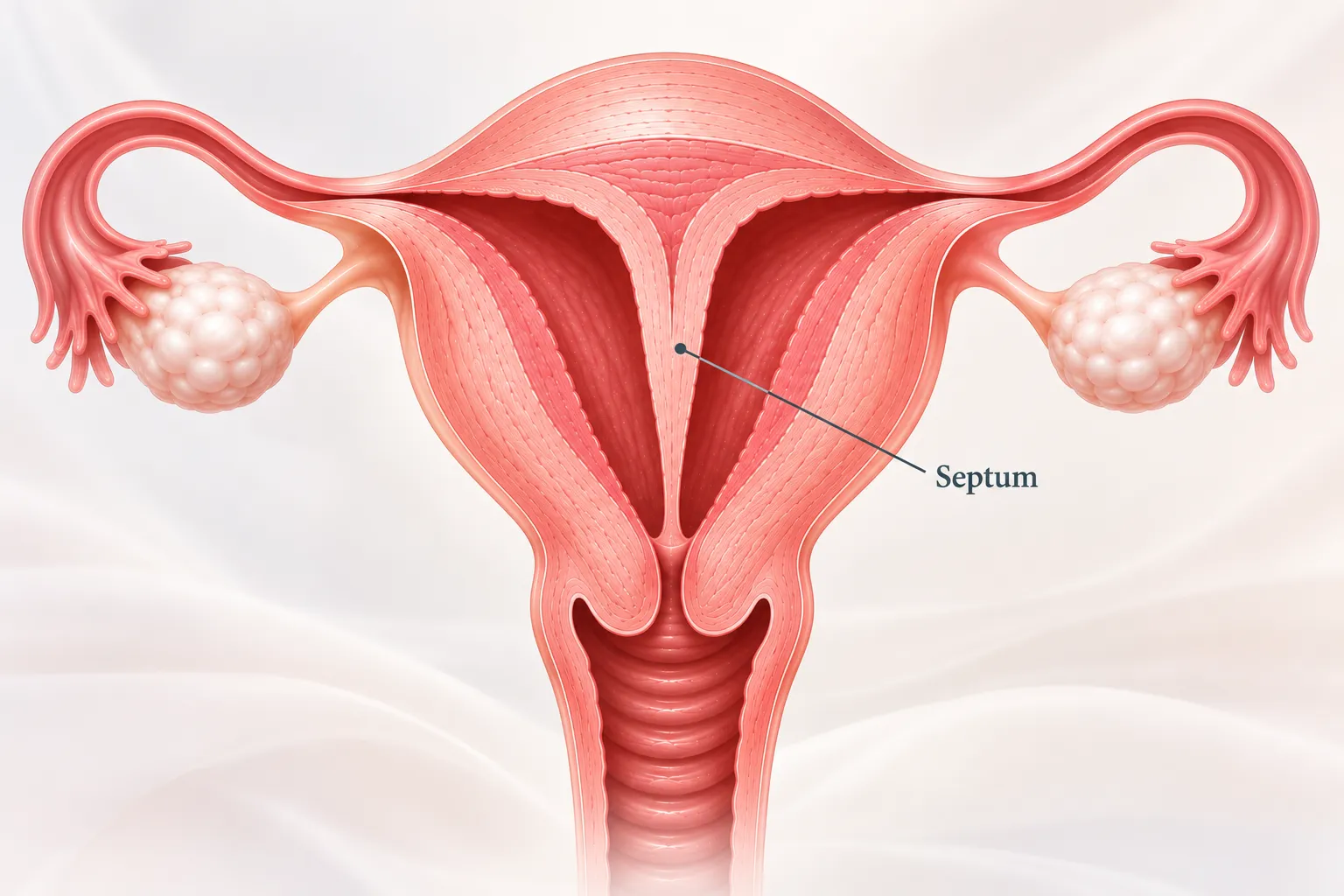
Uterine Septum (Septate Uterus)

Colorful circular infographic showing eight health factors: smoking, alcohol, obesity, stress, laptop use, spa/hot tub, medicines, and pills.
A septum is a band of tissue that divides the inside of the uterus, either partially or completely. It is a congenital condition, meaning you are born with it, rather than something that develops later as a growth. In some women, a uterine septum can increase the risk of miscarriage and preterm birth.
ConditionWhat It IsCommon Symptoms
FibroidsMuscular growths in or on the uterine wallHeavy periods, pelvic pressure, frequent urination
PolypsSoft growths on the uterine liningSpotting between periods, heavy bleeding
SeptumTissue band dividing the uterine cavityRecurrent miscarriage, preterm birth, often no symptoms

Symptoms and Who Needs Evaluation

If you notice any of the following, consider seeing a gynaecologist in Kondapur for fibroids or other uterine problems, and ask for a scan:
Heavy or prolonged periods (needing to change a pad every hour or two )
Bleeding between periods or after intercourse
Pelvic pain, heaviness, or a pressure feeling in the lower abdomen
Pain during periods or intercourse
Frequent urination or constipation
Trouble conceiving after 6 to 12 months of trying
Two or more pregnancy losses
A fibroid or polyp mentioned in an earlier ultrasound
A septum often causes no symptoms at all. Many women find out only after repeated miscarriages. If that sounds familiar, ask for a uterine evaluation before your next attempt.

How Are Fibroids, Polyps and Septum Diagnosed?

Diagnosis follows a clear order. Not every patient needs every test.
Two people sit across a table, with chat bubbles and a medical cross, representing a health consultation.

Step 1. Consultation and Examination

Dr. Pooja takes a detailed history of your periods, symptoms, past pregnancies, and fertility goals. A pelvic examination follows.
Magnifying-glass icon with a phone handset inside, indicating search by phone

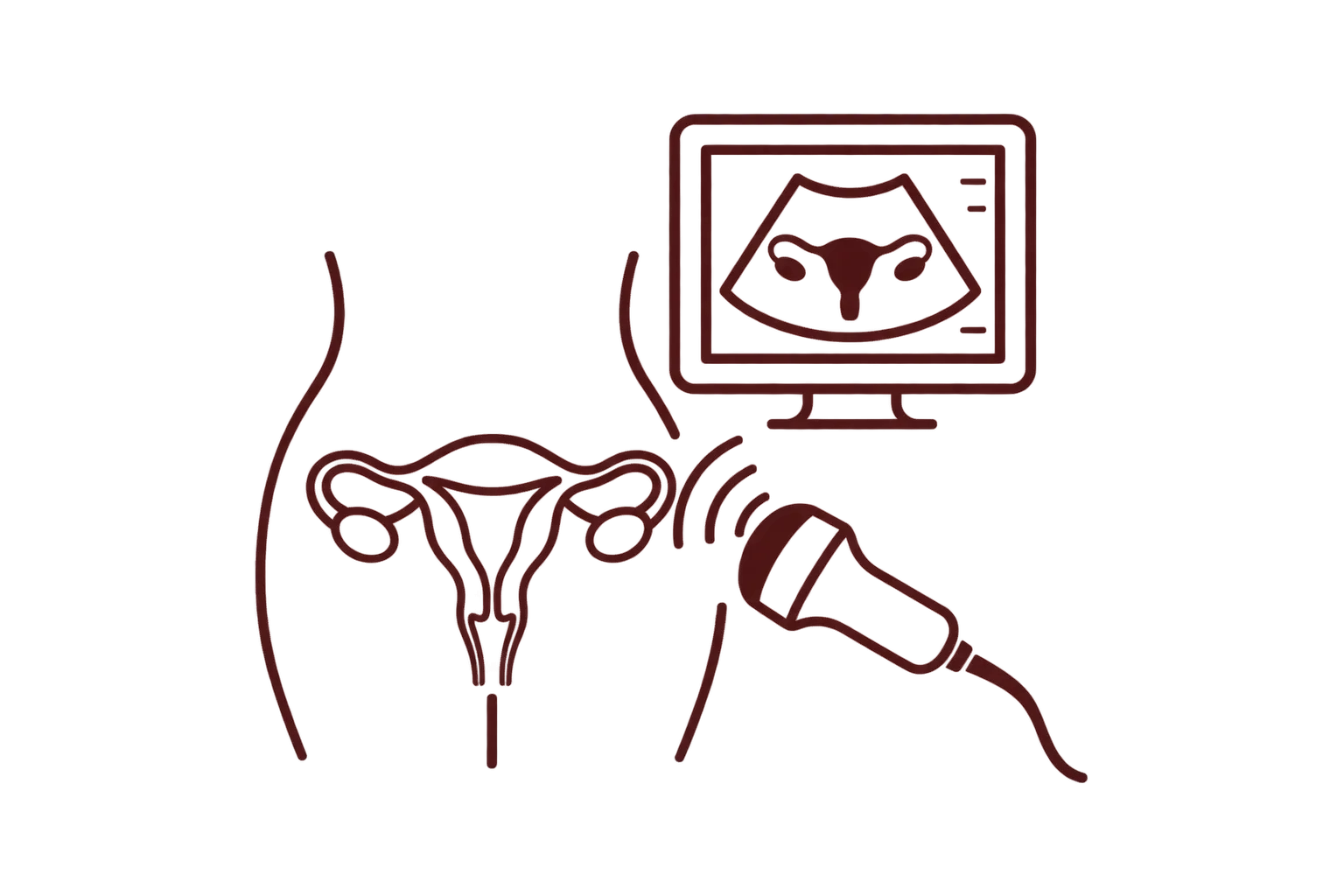
Step 2. Pelvic Ultrasound

A pelvic ultrasound (transvaginal scan) is the first test. It shows the size, number, and position of fibroids and can pick up polyps. A 3D ultrasound can also suggest a septum.
Test tube and magnifying glass icon indicating lab analysis

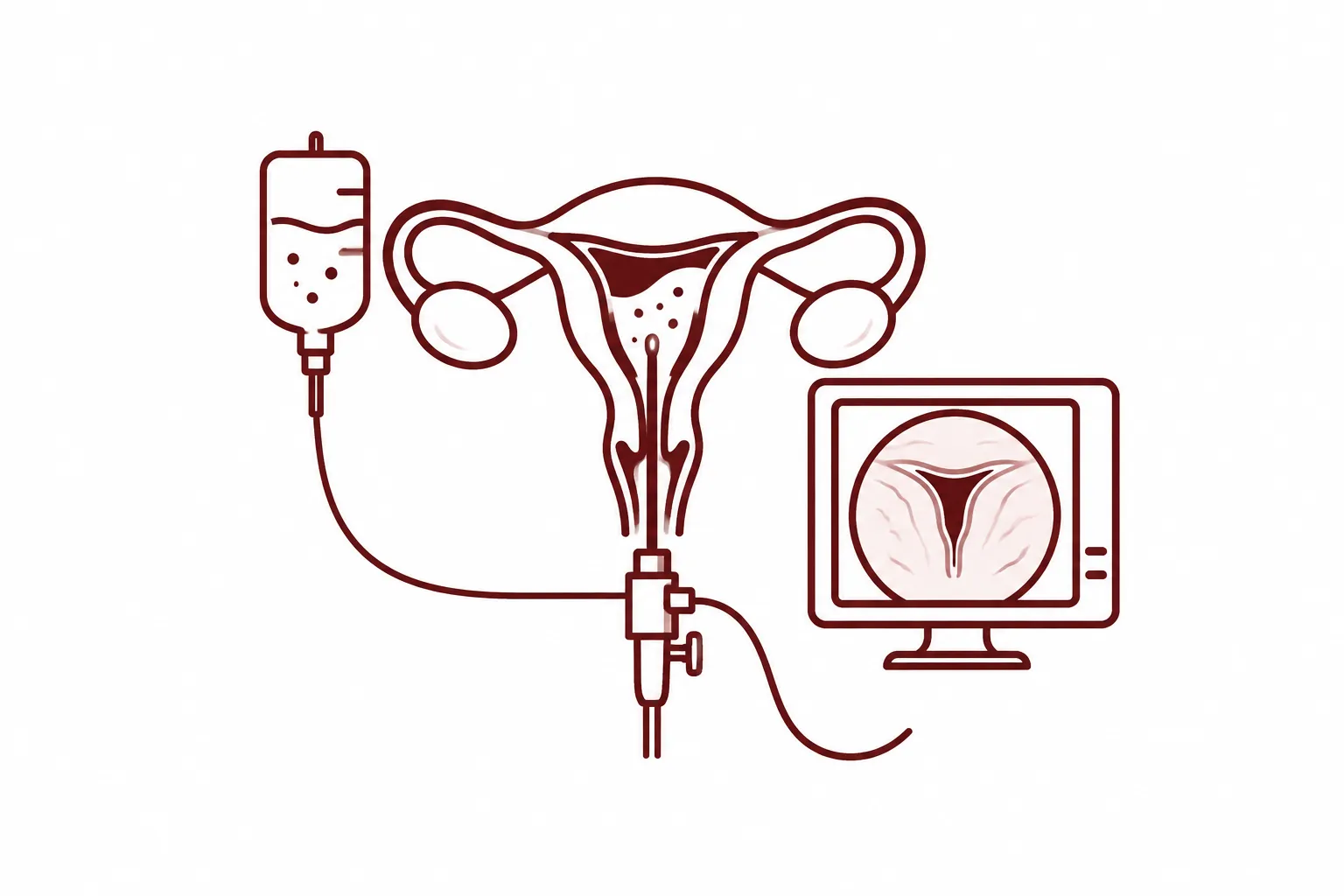
Step 3. Saline Sonography or Hysteroscopy

 For a clearer view of the cavity, saline infusion sonography or a diagnostic hysteroscopy is done. In hysteroscopy, a thin camera is passed through the cervix. The doctor sees the inside of the uterus directly and can often treat a polyp in the same sitting.
Clipboard with a checklist and a circular medical cross badge overlay. (Health/medical checklist icon)

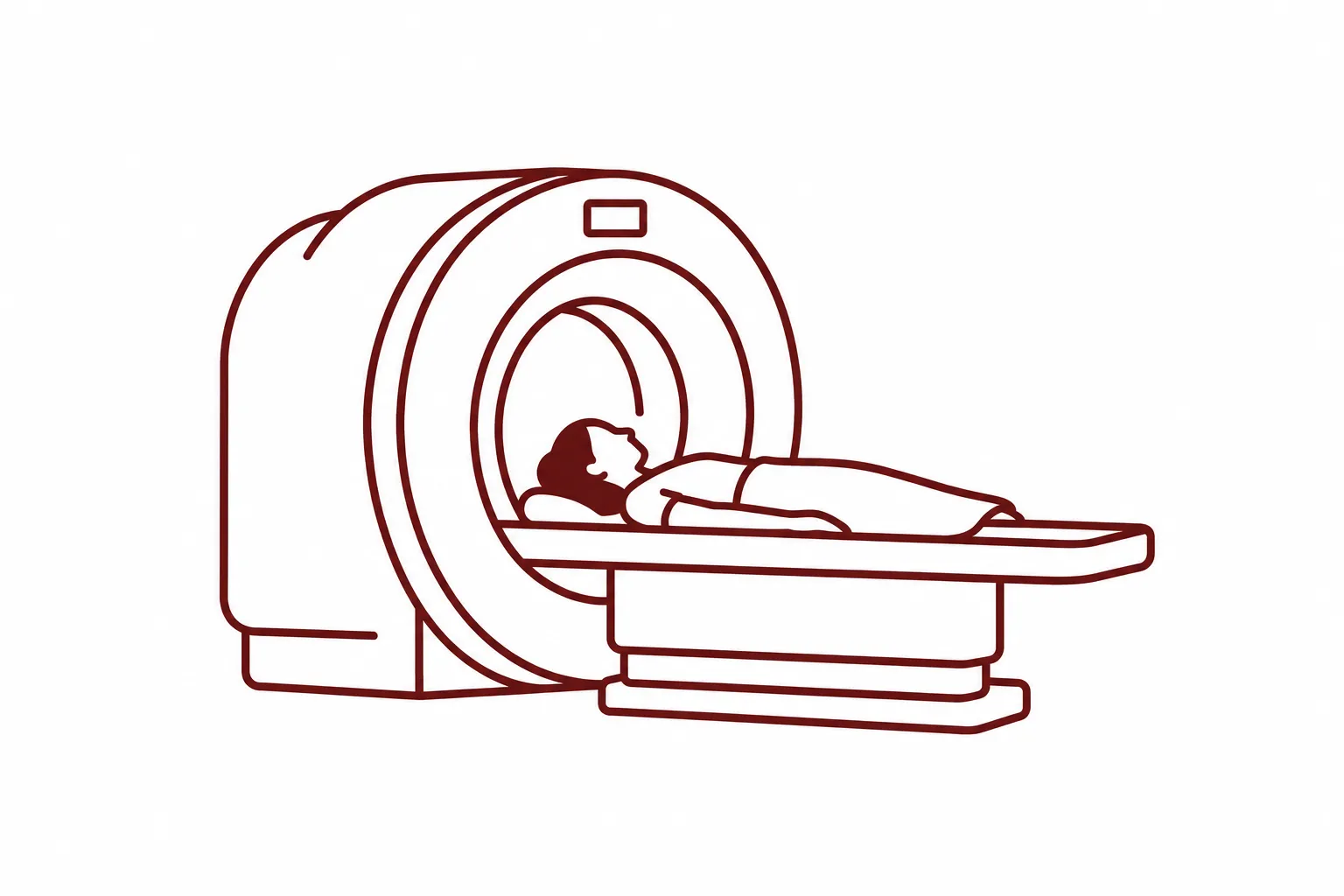
Step 4. MRI (Only When Needed)

MRI helps in complex cases, such as multiple large fibroids or when a septum needs to be distinguished from a bicornuate uterus.
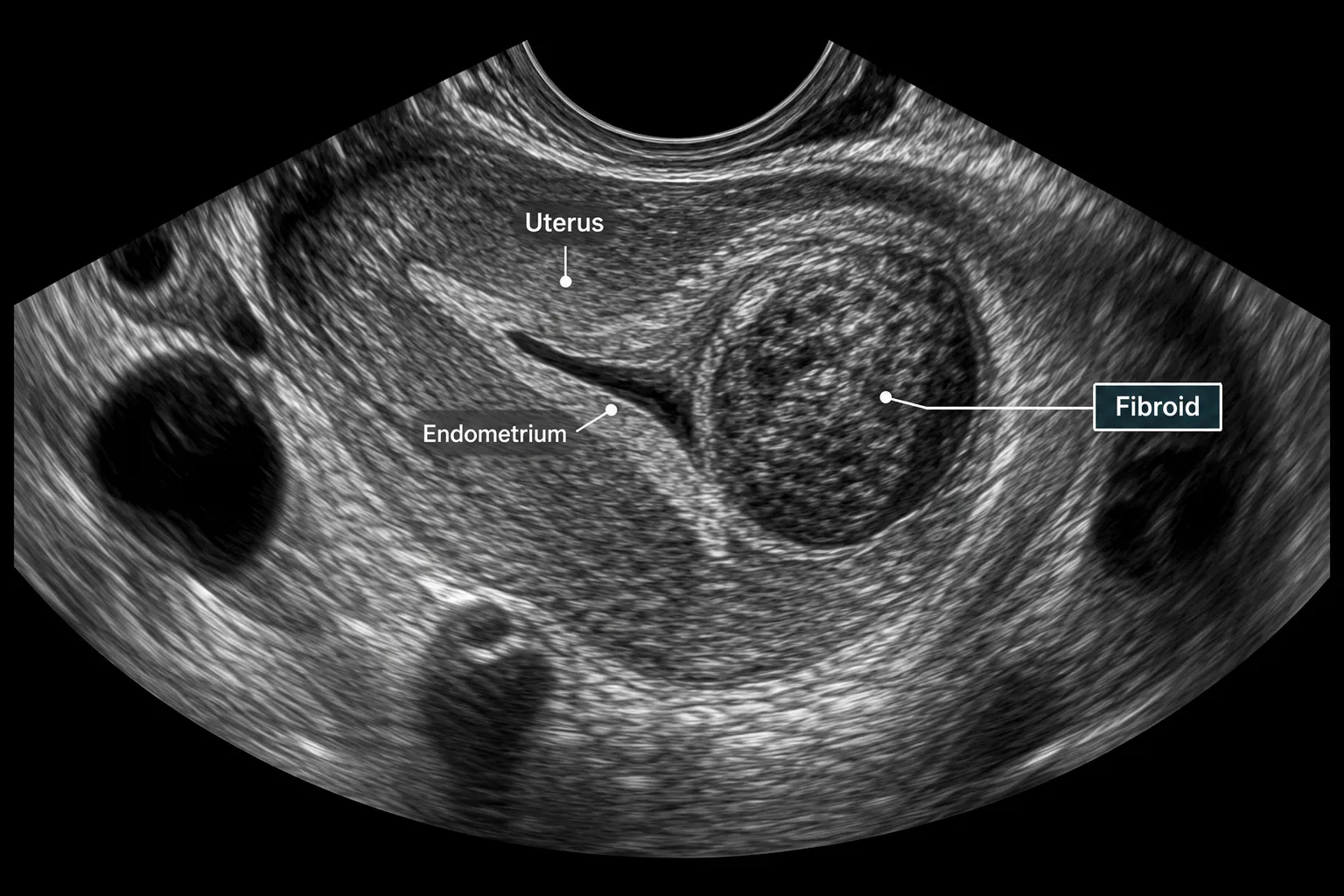
Ultrasound image of uterine fibroid in a patient at Matrika Fertility, Kondapur, Hyderabad

Treatment Options for Fibroids, Polyps and Septum

Treatment depends on your symptoms, the size and position of the problem, and whether you want to get pregnant.

Watchful Monitoring

Small fibroids that are not causing any symptoms may only need regular monitoring, often with an ultrasound every 6 to 12 months. Fibroids may also shrink naturally after menopause as hormone levels change.

Medicines

Medicines can help control symptoms. They do not remove the growth. Your doctor will choose the right medicine after an examination. Do not self-medicate.

Hysteroscopic Polypectomy (Polyp Removal)

A thin scope is passed through the cervix to remove the polyp, so there is no need for an abdominal cut. The procedure is usually done as day care, and most women can return to their routine within a day or two.

Hysteroscopic Septum Resection

The septum is trimmed through a hysteroscope to restore the shape of the uterine cavity. The procedure is usually done as day care. In women with repeated pregnancy losses, treating a septum may improve pregnancy outcomes.

Laparoscopic Myomectomy (Fibroid Removal)

In laparoscopic myomectomy in Kondapur, Hyderabad, fibroids are removed through small keyhole cuts while preserving the uterus. Fibroids inside the uterine cavity can often be removed through hysteroscopy without abdominal cuts.

Hysterectomy

Removal of the uterus is kept as a last option for women who have completed their family and have severe symptoms that other treatments could not control.

“A uterine septum is one of the few causes of miscarriage we can correct with a short procedure. Fixing it once can change every pregnancy that follows.”

– Dr. Pooja Papishetty, Matrika Fertility and Laparoscopic Centre, Kondapur
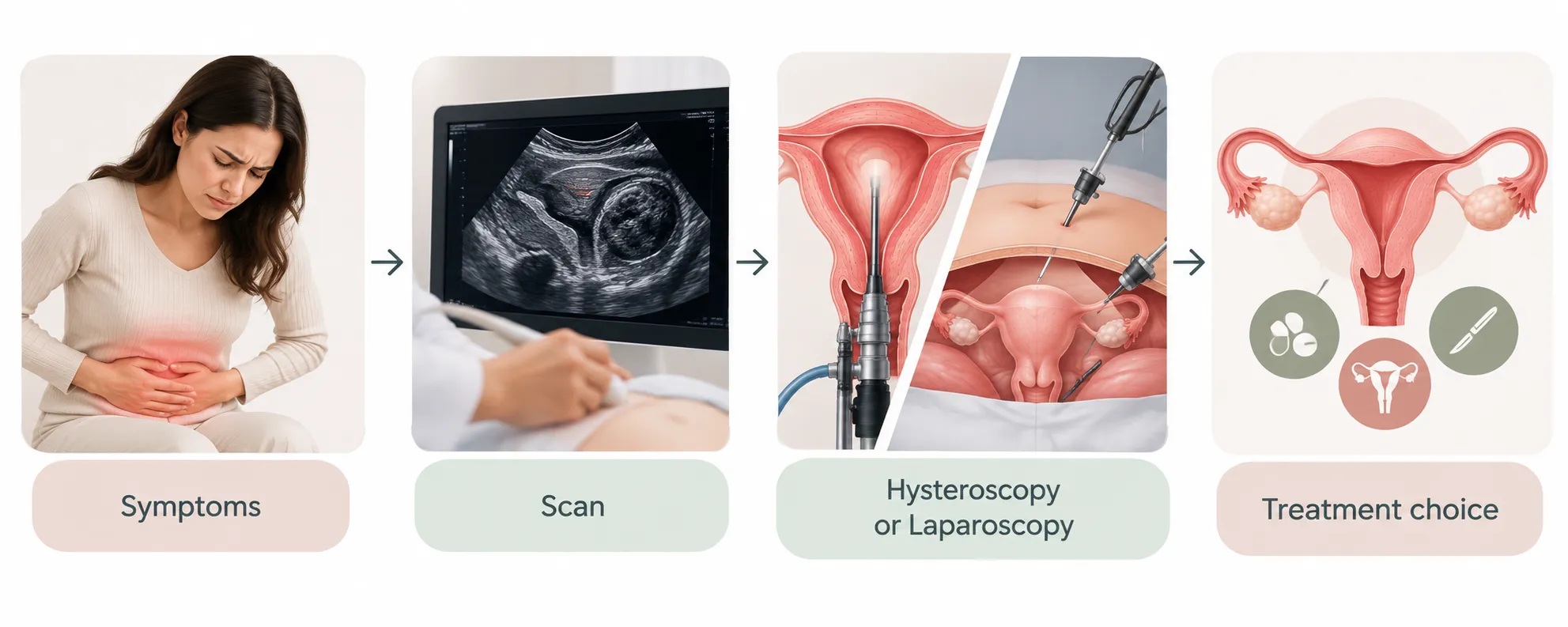
Treatment pathway for fibroids, polyps and septum at Matrika Fertility and Laparoscopic Centre
Not sure whether you need medicines, a scope, or surgery? Let Dr. Pooja map out the gentlest route for you.

Uterine Conditions and Fertility: What You Should Know

These conditions do not always stop pregnancy, but they can make it harder or riskier.
Fibroids that press into the cavity can block implantation
Polyps can disturb the uterine lining where the embryo should settle
A septum can raise the risk of miscarriage and preterm labour
Large fibroids may affect the baby’s position or delivery

Most women conceive naturally after treatment. For women with repeated miscarriage, uterine septum treatment in Kondapur, Hyderabad can improve the chances of carrying a pregnancy to term. If you are planning IVF treatment or IUI treatment, correcting the uterus first usually improves the chance of a healthy pregnancy. Dr. Pooja usually advises waiting one to three months after surgery, depending on the procedure.

Heavy periods, repeated losses, or an unclear scan are all reasons to get checked, not reasons to wait.

Why Choose Matrika Fertility and Laparoscopic Centre?

What We OfferWhy It Helps You
In-house hysteroscopy and laparoscopyDiagnosis and treatment in one place
Fellowship in reproductive medicineYour fertility goals shape every decision
Minimally invasive approachSmaller cuts, less pain, faster recovery
Medicines and monitoring first, where suitableYou do not get surgery you do not need
Easy access in KondapurConvenient for patients from Madhapur, Gachibowli and Kothaguda

How to Prepare and What to Expect After Treatment

Before the Procedure

  • Share your full medicine list, including blood thinners
  • Do blood tests and scans as advised
  • Follow the fasting instructions given by the team

After the Procedure

  • Mild cramping and light bleeding for a few days are common
  • Hysteroscopy patients usually go home the same day
  • Laparoscopic myomectomy patients usually rest for a few days
  • Avoid intercourse and heavy exercise until the doctor clears you
  • Call us if you have heavy bleeding, fever, or severe pain

“A fibroid, a polyp, or a septum does not decide your future. Finding it early and treating it right does.”

– Dr. Pooja Papishetty, Matrika Fertility and Laparoscopic Centre, Kondapur

Questions Men Actually Ask

1. Do all fibroids need surgery?
No. Small fibroids with no symptoms are usually just monitored. Surgery is advised for heavy bleeding, pain, fast growth, or when fibroids affect fertility.
2. Can a uterine septum cause miscarriage?
Yes. A septum is a known cause of repeated pregnancy loss. Hysteroscopic septum resection can improve the outcome of future pregnancies.
3. Is hysteroscopy painful?
It is usually done under sedation or light anaesthesia, so you will not feel pain during the procedure. Mild cramps afterwards are normal.
4. Can I still have a baby after laparoscopic fibroid removal in Kondapur, Hyderabad?
Yes. Many women conceive naturally after treatment. Dr. Pooja will tell you when to start trying based on your procedure.
Powered by Joinchat
Call Now Button