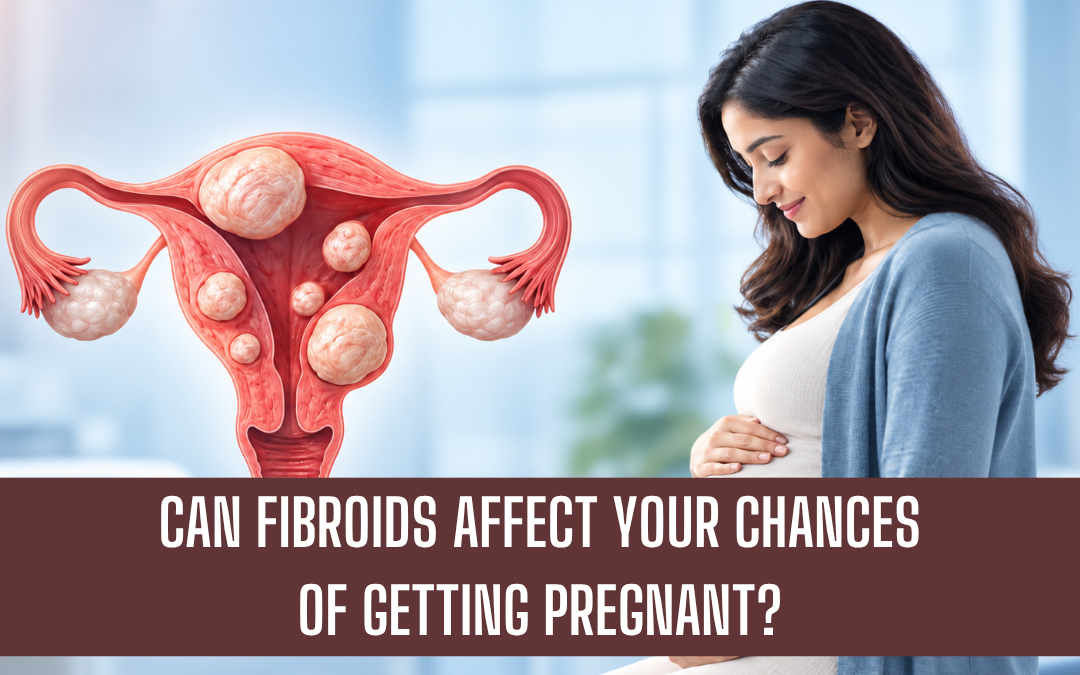
Depends entirely on where it sits. Not whether you have one. Submucosal, growing into the cavity itself? That lowers pregnancy and implantation rates, no question. Subserosal, sitting out on the wall. Barely counts as a fertility issue. Intramural sits in between. Size only matters once location’s already picked the category, and that’s the part people skip.
According to Dr. Pooja Papishetty, a fertility specialist and Laparoscopic Surgeon in Kondapur, “Not every fibroid needs removing before you try to conceive. The ones distorting the cavity, yes. The ones sitting on the outside? Leave them.”
Not sure if yours is the type that actually needs treatment first?
Which Fibroids Actually Lower Your Chances of Conceiving?
Location decides almost everything. Size only enters once you’re already inside that category, and most patients are surprised how little the number on the scan report actually tells you on its own.
- Submucosal fibroids: Grows into the cavity. Sits right where the embryo needs to land. Pregnancy odds cut nearly in half in some studies, and implantation rates take a hit too, because the lining underneath that fibroid never develops the way it should. Not small, not something to shrug off.
- Intramural fibroids: Above 4cm? Blood flow to the lining starts getting affected. Even without touching the cavity directly, a large enough one changes how the uterus contracts during implantation, which is a detail most scan reports don’t mention.
- Subserosal fibroids: Outer surface. Rarely interferes with anything. Removing one for fertility reasons alone? Usually not necessary at all, unless it’s pressing on something else or growing fast enough to raise other questions.
- Multiple fibroids: Here’s the catch. Two or three small ones crowd the cavity same as one big one, and they’re also harder to map accurately on a standard scan, which is part of why a direct look sometimes changes the whole picture.
When a fibroid’s confirmed to be distorting the cavity, laparoscopic surgery is usually next, done with small incisions and a shorter recovery than open surgery. Before anything else starts.
When Should Fibroids Be Treated Before Trying to Conceive?
Not every fibroid needs a decision right now. Some genuinely can wait, and treating one that isn’t causing trouble just adds recovery time for no real benefit.
- Recurrent miscarriage: Cavity-distorting fibroids. Linked to higher early loss, likely because the lining can’t support implantation properly in that spot. Take them out, and that risk often drops in the next cycle attempted.
- Failed IVF cycles: Good embryo, bad landing spot. Doesn’t matter how strong it looked on paper, or how many it took to get there. A fibroid in the way is a fibroid in the way, and repeating transfers without addressing it rarely changes the outcome.
- Rapid growth: Grown noticeably in a few months? Needs imaging. Needs an actual plan, not another routine scan next year, because growth rate on its own can signal something worth investigating further.
- Symptom overlap: Heavy bleeding. Pelvic pressure. Fertility struggles. All three together, that’s rarely a coincidence, and it’s usually the combination that brings someone in rather than any one symptom alone.
A hysteroscopy evaluation is usually step one here, since it gives a direct view that ultrasound alone can’t always provide. See what’s actually happening inside before touching anything.
Why Choose Dr. Pooja Papishetty for Fibroid-Related Fertility Care?
Dr. Pooja Papishetty. MBBS, MS Obstetrics and Gynaecology, Fellowship in Reproductive Medicine from Bedi Hospital Chandigarh. Close to five years doing this, fibroids and infertility specifically. FOGSI and IMA member. And she won’t operate just because a fibroid shows up on a scan, it’s decided case by case.
Most patients walk in assuming surgery’s inevitable. It’s usually not. Sorting that out early, that’s what saves people the needless worry. Call +91 7780612539 to book your consultation.
Frequently Asked Questions
Do all fibroids need to be removed before pregnancy?
No, only fibroids distorting the uterine cavity typically need removal first.
Can fibroids cause miscarriage, not just difficulty conceiving?
Yes, cavity-distorting fibroids are linked to a higher risk of early miscarriage.
How is a fibroid's location on fertility actually confirmed?
Usually through ultrasound combined with a hysteroscopy for a direct view inside.
Can you get pregnant naturally with untreated fibroids?
Often yes, especially with subserosal or small intramural fibroids not touching the cavity.
References
- Fibroids, Infertility and Laparoscopic Myomectomy
- Fibroids and Fertility: An Updated Systematic Review
Disclaimer: This blog is for educational purposes only and is not a substitute for professional medical advice.