Postpartum Muscle Recovery in Kondapur, Hyderabad
Postpartum muscle recovery is the process of rebuilding the pelvic floor, abdominal, and back muscles that stretch and weaken during pregnancy and delivery. Most women recover well with the right exercises, good habits, and time, while a few need extra support.
At Matrika Fertility and Laparoscopic Centre, an IVF centre in Kondapur, Hyderabad, Dr. Pooja Papishetty, an IVF doctor and cosmetic gynecologist with fellowship training in reproductive medicine, guides new mothers through postpartum recovery. She assesses muscle recovery and provides guidance based on each woman’s needs.
Recovery involves more than just healing stitches. Urine leakage, abdominal weakness, and a feeling of heaviness in the pelvis can occur after delivery. With appropriate care and guidance, these concerns can be addressed as part of postpartum recovery.
“Many new mothers think leaking or a weak belly is just part of having a baby. It is common, but it is also treatable. Nobody should wait years to ask.” – Dr. Pooja Papishetty, Cosmetic Gynaecologist and Fertility Specialist, Kondapur, Hyderabad
What Is Postpartum Muscle Recovery?
Postpartum muscle recovery in Kondapur, Hyderabad begins with understanding what pregnancy and delivery do to your body. During pregnancy, the abdominal muscles stretch, the pelvic floor carries additional weight, and the uterus undergoes significant changes in size and muscle structure. In a vaginal delivery, the pelvic floor muscles stretch even further. In a C-section, the abdominal layers are cut and need time to heal.
Postpartum muscle recovery means helping these muscles regain strength, support and coordination. It covers three main areas:
- Pelvic floor muscles
- Abdominal and core muscles
- Back, hip and posture muscles
Recovery looks different for every woman. It depends on the type of delivery, the size of the baby, tears or an episiotomy, and how many pregnancies you have had.
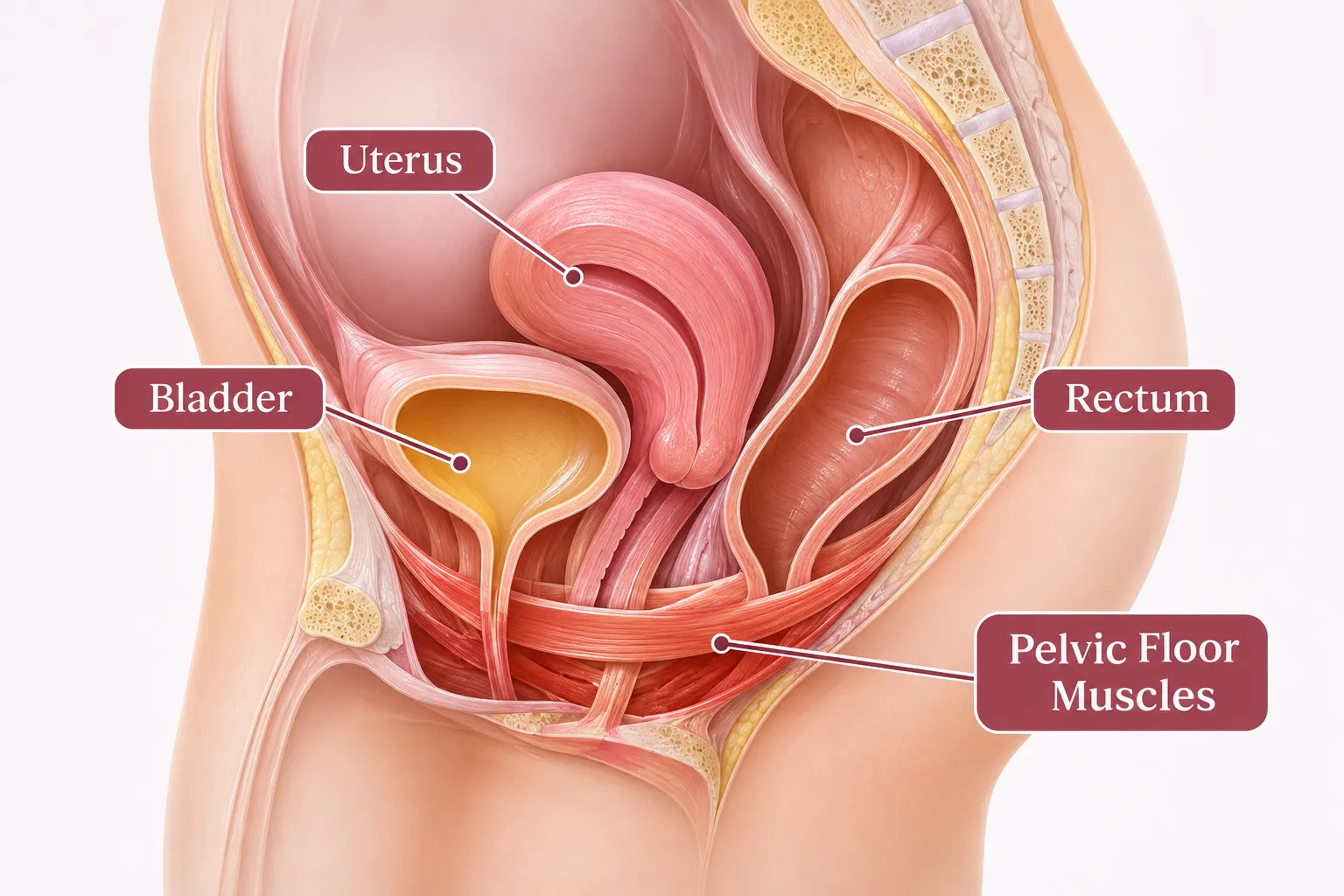
| Muscle Group | What It Does | Common Problem After Delivery |
| Pelvic floor muscles | Support the bladder, uterus and bowel | Urine leakage, heaviness, painful intercourse |
| Rectus abdominis (the “six-pack” muscle) | Helps you bend and stabilise your trunk | Separation of the two halves (diastasis recti) |
| Deep core muscles | Support the spine and pelvis | Lower back pain, weak belly |
| Hip and back muscles | Help with posture and lifting | Aches from feeding and carrying the baby |
Signs You May Need Help With Postpartum Muscle Recovery
Consider speaking to your doctor if you notice any of these:
- Leaking urine when you cough, sneeze, laugh or lift
- A sudden, strong urge to pass urine
- A feeling of heaviness or a bulge in the vagina
- A visible ridge or dome along the middle of your belly when you sit up
- A belly gap that is still wide after a few months
- Lower back or pelvic pain that does not settle
- Pain during intercourse
- Trouble holding in gas or stool
If you have experienced a long journey to pregnancy, you may feel hesitant to talk about postpartum discomfort. But your recovery matters too, and your concerns deserve attention. And if these symptoms come with pelvic pain or unusual bleeding, a pelvic ultrasound can help find the cause.
Normal Healing vs When to Get Checked
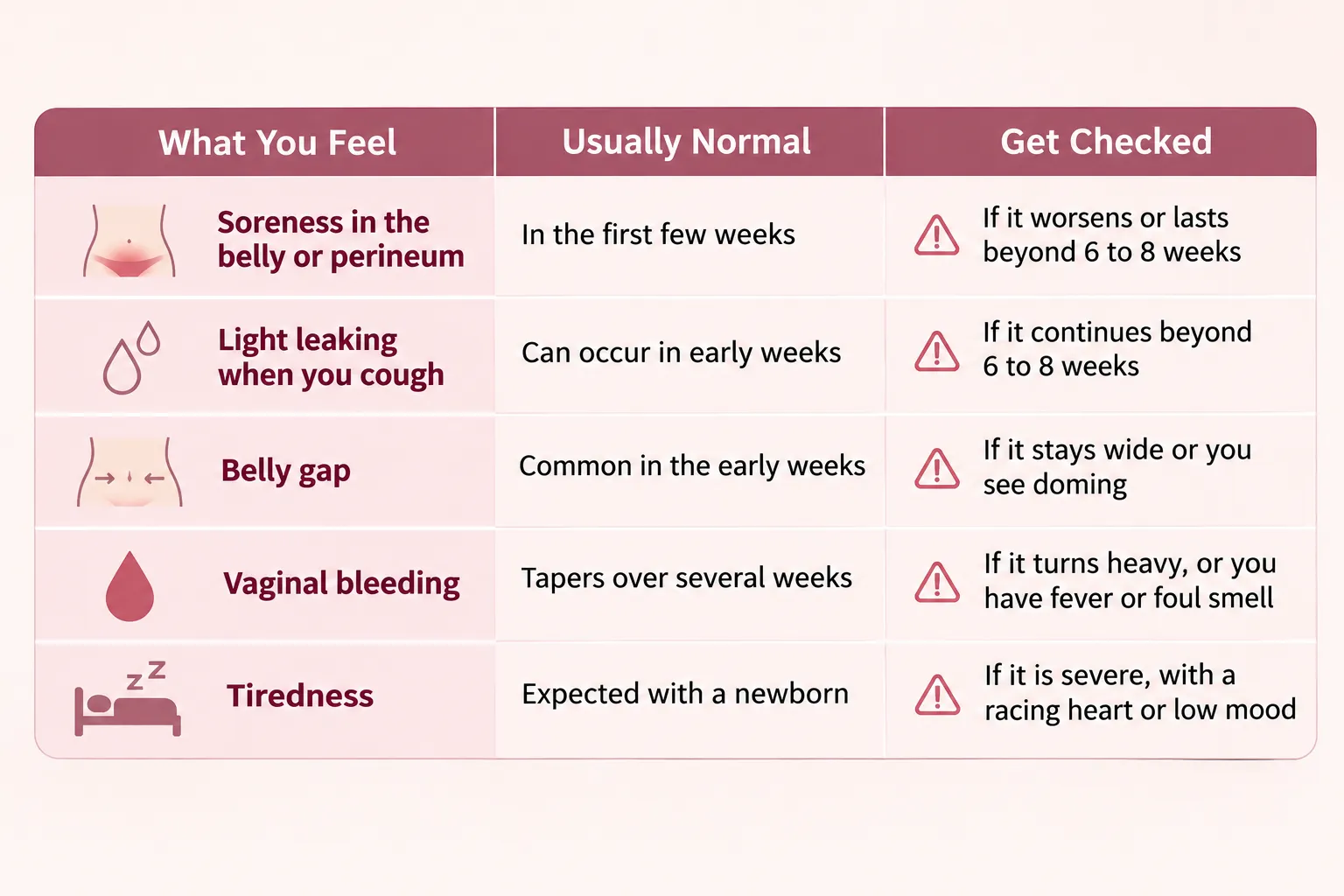
How Is Postpartum Muscle Recovery Done? Step by Step

Step 1. Assessment
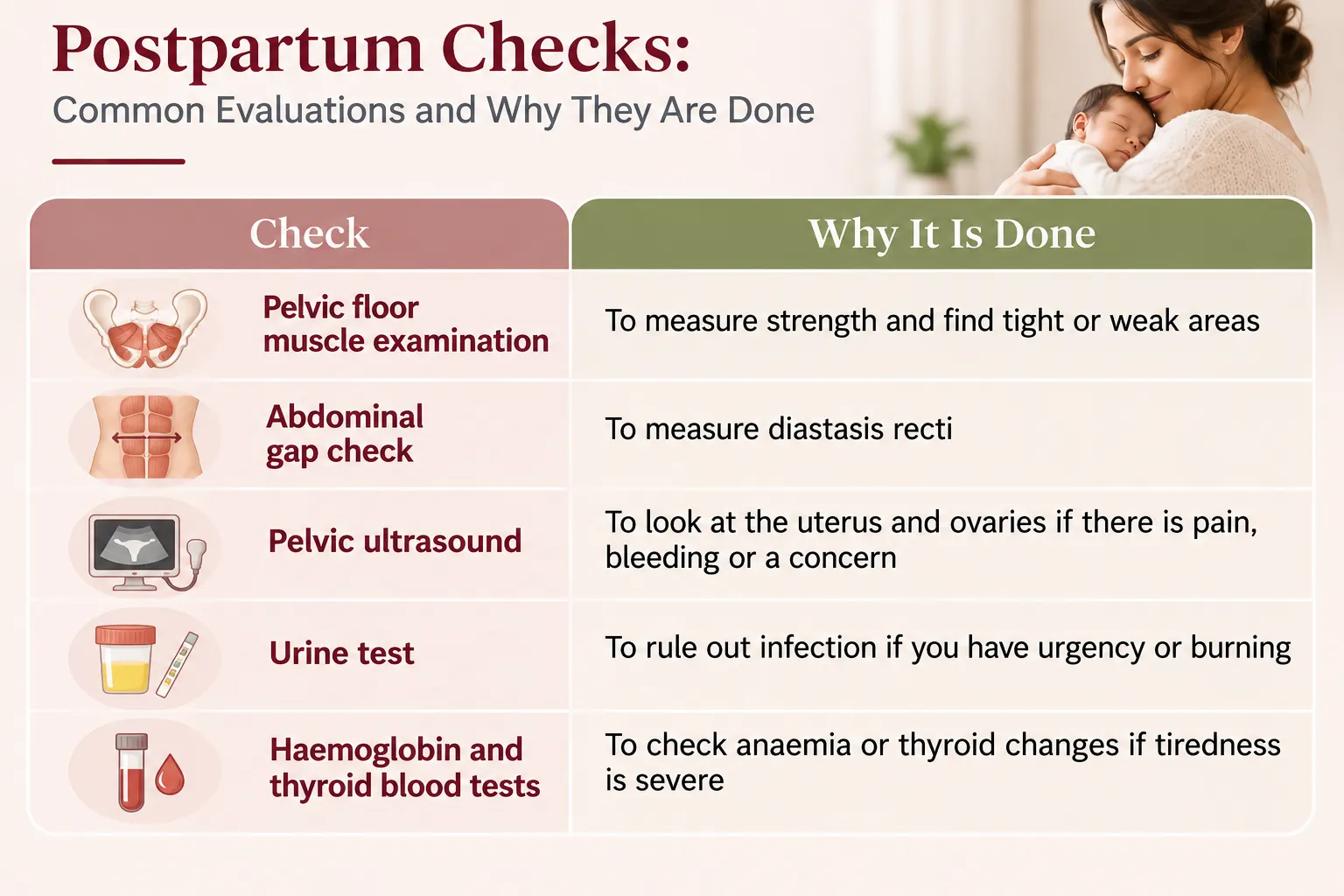
Dr. Pooja asks about your delivery, your symptoms and your daily routine. A gentle examination checks your pelvic floor strength and any gap between the belly muscles. This gives a clear starting point for your plan.

Step 2. Breathing and Gentle Muscle Activation
Step 3. Pelvic Floor Exercises

Step 4. Core Strengthening

Step 5. Daily Habits That Protect Your Muscles

Step 6. Extra Support When Needed

Step 7. Gradual Return to Exercise
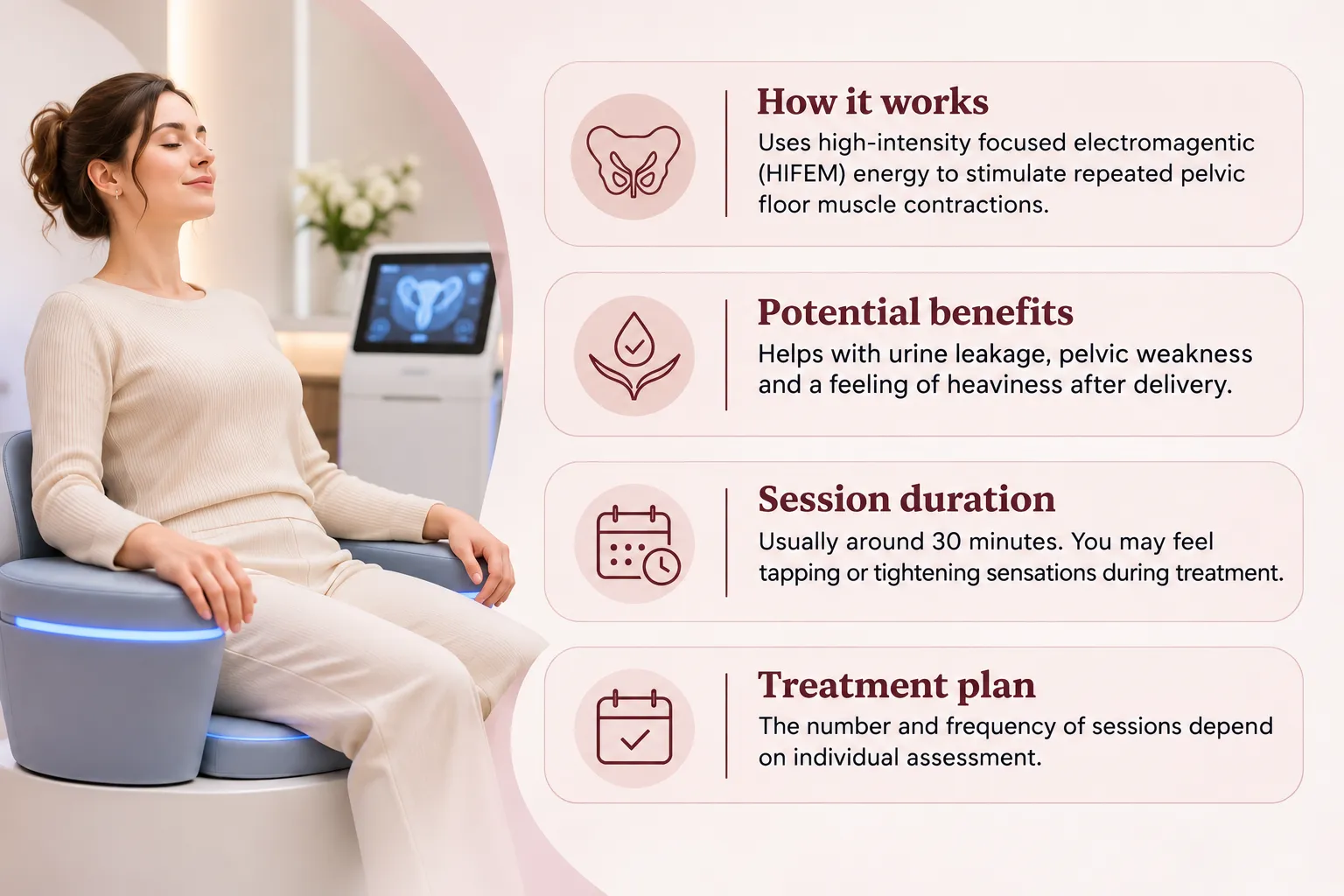
Tesla Chair for Postpartum Pelvic Floor Support
Pelvic floor exercises are an important part of recovery, but some women may find it difficult to engage the right muscles. The Tesla Chair may be considered as additional support alongside these exercises.
Important Considerations
- No replacement for exercises: It is an additional support, not a substitute for pelvic floor exercises.
- Limited research: Evidence for its use within the first 3 months postpartum is still limited.
- Who should avoid it: Not suitable during pregnancy or for women with certain pacemakers or metal implants near the pelvis.
- Individual assessment: Pooja evaluates suitability before treatment, considering individual health and recovery needs, including relevant aspects of cosmetic gynaecology.
Understanding the Treatment
Medicines and Supplements During Recovery
“Exercises work best when they are matched to your body. A plan that suits your friend may not suit you.” – Dr. Pooja Papishetty
Postpartum Core Recovery and Diastasis Recti
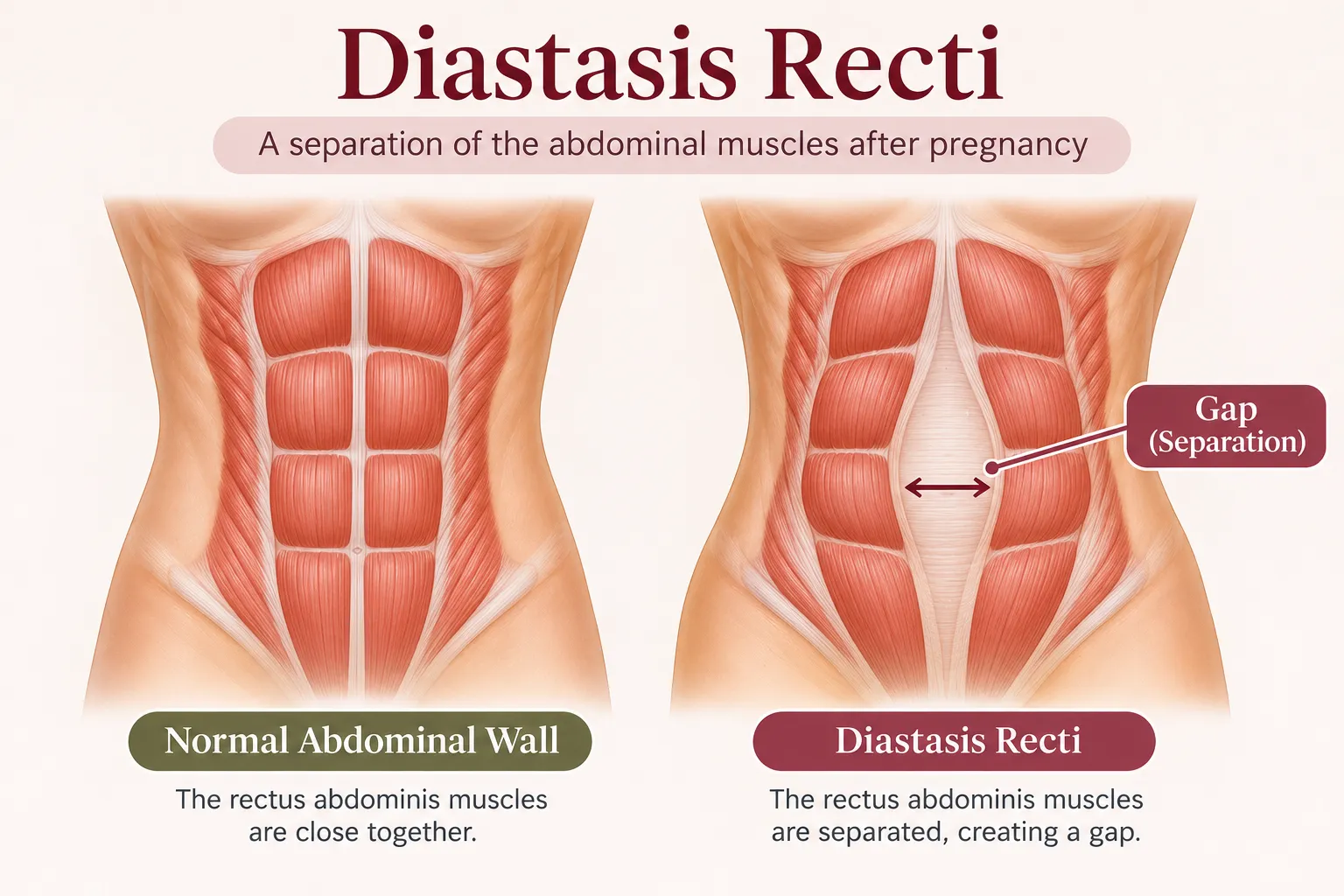
Diastasis recti is a separation of the left and right halves of the rectus abdominis muscle. It is very common after pregnancy, and in many women it narrows on its own over the following months.
You can do a simple check at home. Lie on your back with your knees bent, lift your head slightly and press your fingers just above and below your belly button. A gap wider than about two finger widths, or a ridge that pops up, is worth showing your doctor.
Diastasis recti treatment in Kondapur, Hyderabad usually starts with targeted core exercises and posture advice. Surgery is considered only in a small number of cases where the gap is large and causes ongoing problems.
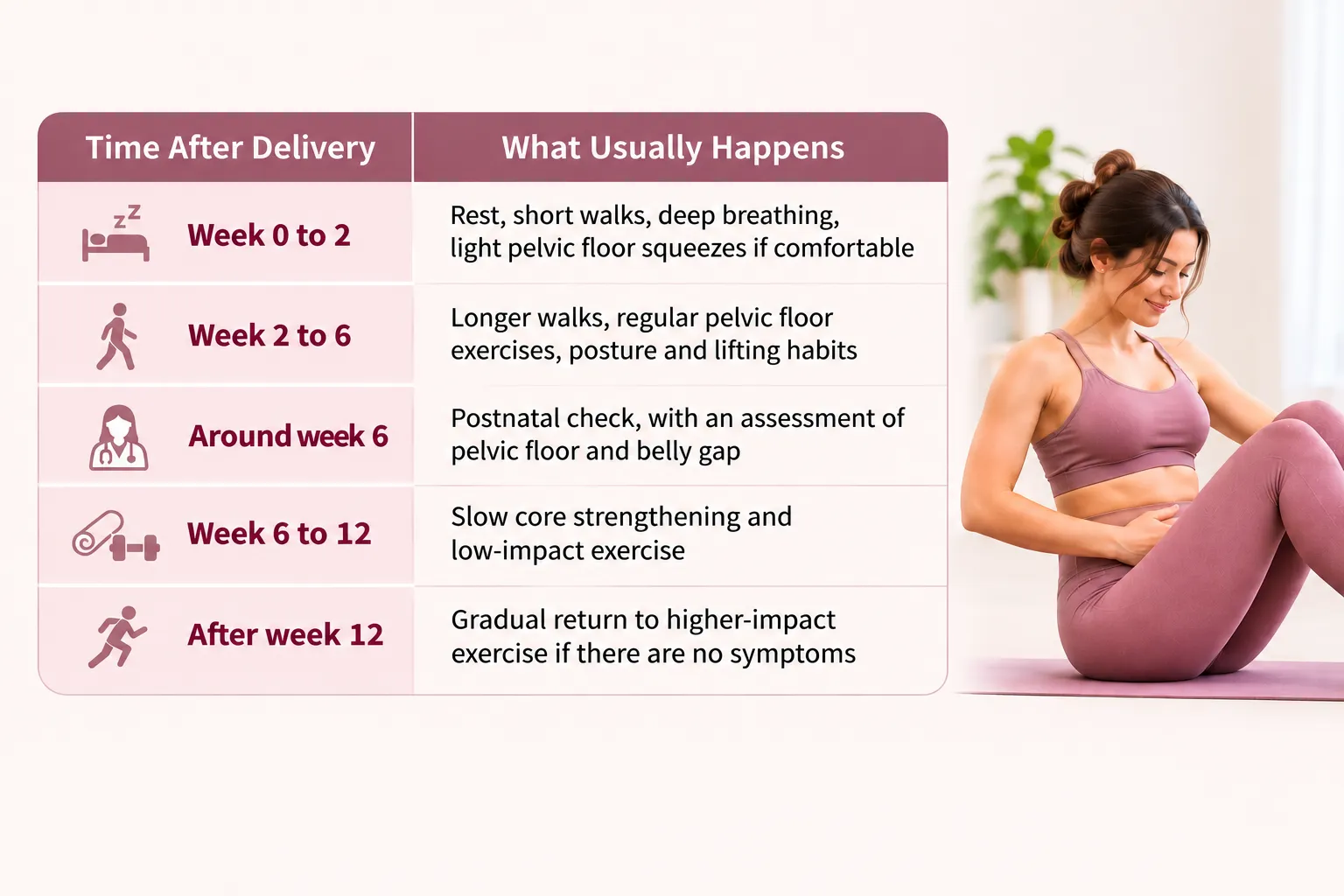
Postpartum Muscle Recovery Timeline: What to Expect
Every woman heals at her own pace. This table shows a general guide.
Every woman’s recovery is different. While some notice improvement within a few weeks, others may need several months. If your symptoms persist or do not improve, consider getting a professional assessment to understand what additional support you may need.
“Recovery is not a race. A slow start with the right exercises gets you to a stronger place than rushing back.” – Dr. Pooja Papishetty, Matrika Fertility and Laparoscopic Centre
Postpartum Muscle Recovery Evaluation with Dr. Pooja Papishetty
Before any plan is made, Dr. Pooja Papishetty at Matrika Fertility and Laparoscopic Centre, Kondapur, Hyderabad, first assesses how your body is healing, including your uterine condition and muscle recovery. The evaluation involves a conversation and a gentle examination, with every step planned according to your individual needs.
What You Can Expect from the Visit
- Your muscles, scar, and uterus are checked together in one visit
- Returning periods, breastfeeding, and hormone changes are considered along with muscle strength
- Recovery is guided by a cosmetic gynaecologist with fellowship training in reproductive medicine, which matters if your baby came through IVF or ICSI
- Advice on the right gap before your next pregnancy, with fertility planning if you need it
- Tesla Chair muscle stimulation available at the clinic, if Dr. Pooja finds it suitable for you
What Is Reviewed in the Evaluation
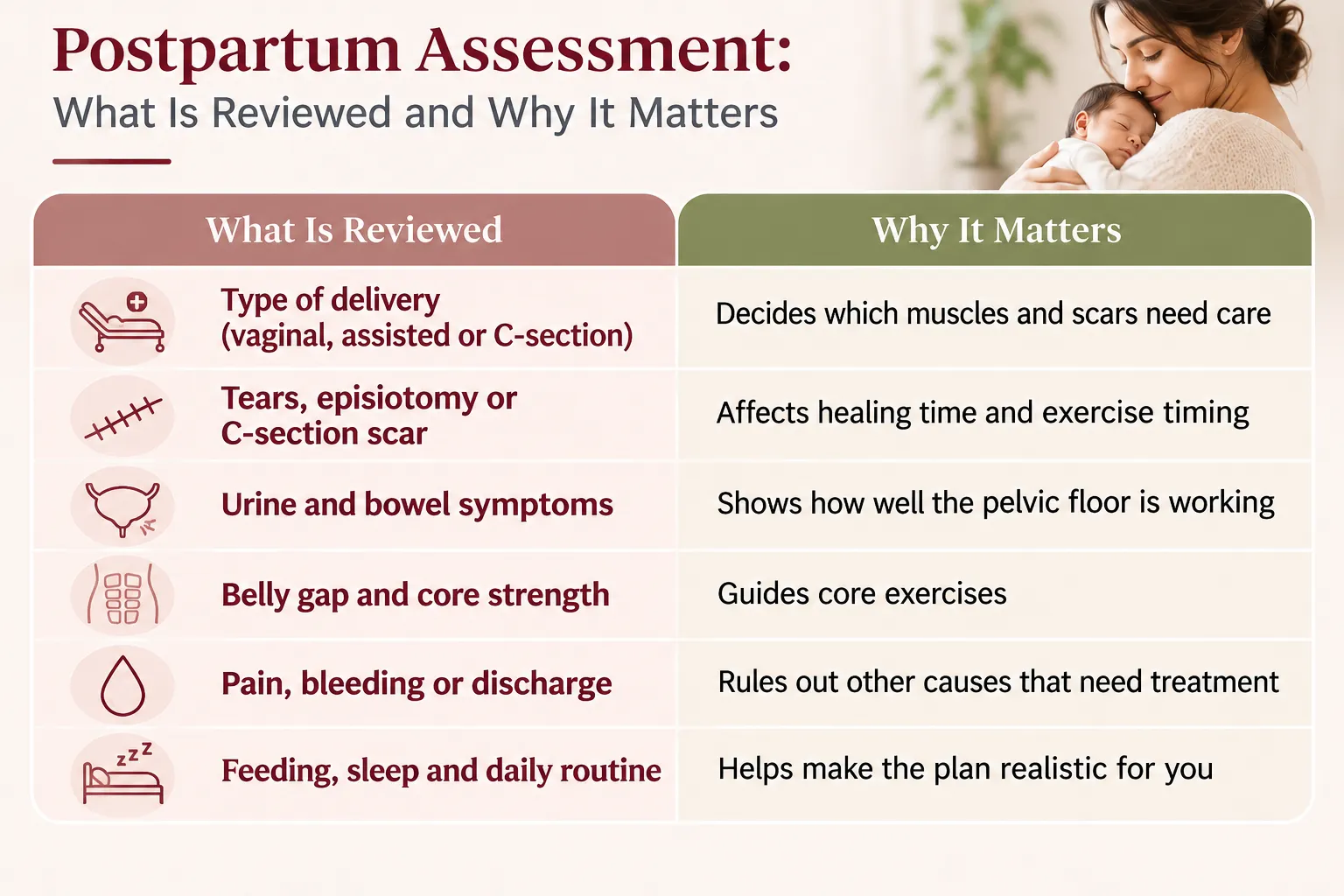
Checks Done Before Starting Your Recovery Plan