
Embryo Biopsy (PGT) in Kondapur, Hyderabad
Embryo biopsy is a step in IVF where a few cells are taken from a day 5 or day 6 embryo and tested for chromosomal or genetic problems before transfer. This testing is called preimplantation genetic testing, or PGT.
At Matrika Fertility and Laparoscopic Centre, an IVF centre in Kondapur, Hyderabad, we offer embryo biopsy for couples who want more clarity before an embryo transfer. Dr. Pooja Papishetty, an IVF doctor in Kondapur, Hyderabad, with fellowship training in reproductive medicine, first helps you decide whether PGT is actually right for you.
Not every couple needs it. For some, it can reduce the heartbreak of repeated miscarriages or failed transfers. For others, it adds cost without much benefit. An honest conversation comes first.
“A healthy embryo is the best starting point for any pregnancy. Our job is to help you find it, without putting you through avoidable losses.”
– Dr. Pooja Papishetty, Fertility Specialist, Kondapur, Hyderabad
That is exactly what embryo biopsy in Kondapur, Hyderabad is meant to do. It gives your doctor more information to choose which embryo to transfer first.
What Is Embryo Biopsy (PGT)?
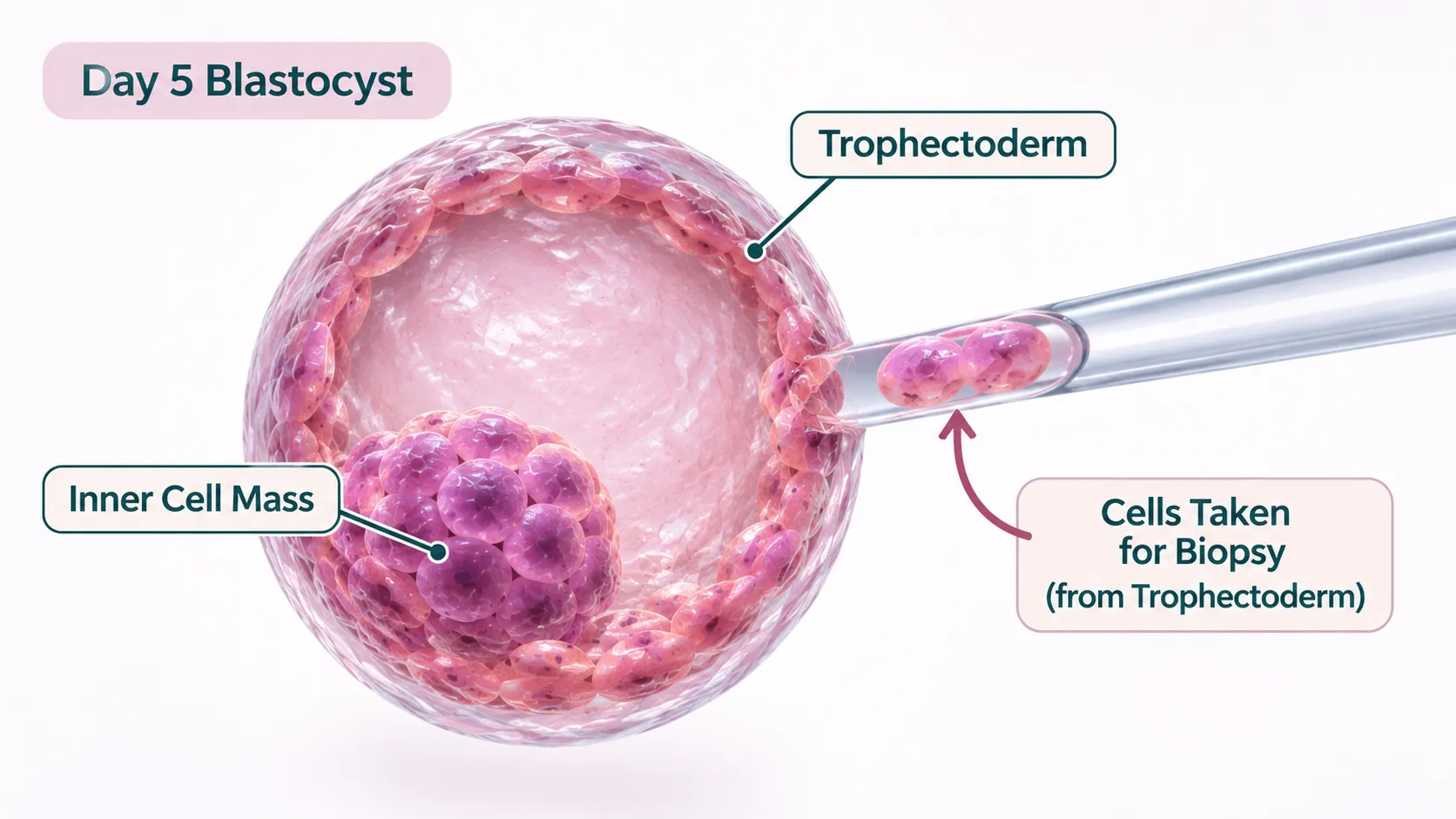
Embryo biopsy is the procedure used to collect a small sample of cells from the embryo, while Preimplantation Genetic Testing (PGT) is the laboratory test performed on those collected cells.
During the procedure, an embryologist carefully removes around 5–10 cells from the outer layer of a blastocyst, known as the trophectoderm. This layer eventually develops into the placenta, while the inner cell mass develops into the baby. The biopsy is performed carefully to minimise any impact on the embryo’s development.
The collected cells are sent for genetic analysis, while the embryo is safely frozen. Once the report is ready, embryos are assessed based on their genetic findings to guide selection for transfer.
Preimplantation Genetic Testing (PGT) in Kondapur, Hyderabad, is performed as part of an IVF cycle. It cannot be done with natural conception or IUI, as the embryo must first be created and developed in a laboratory.
Types of PGT Tests
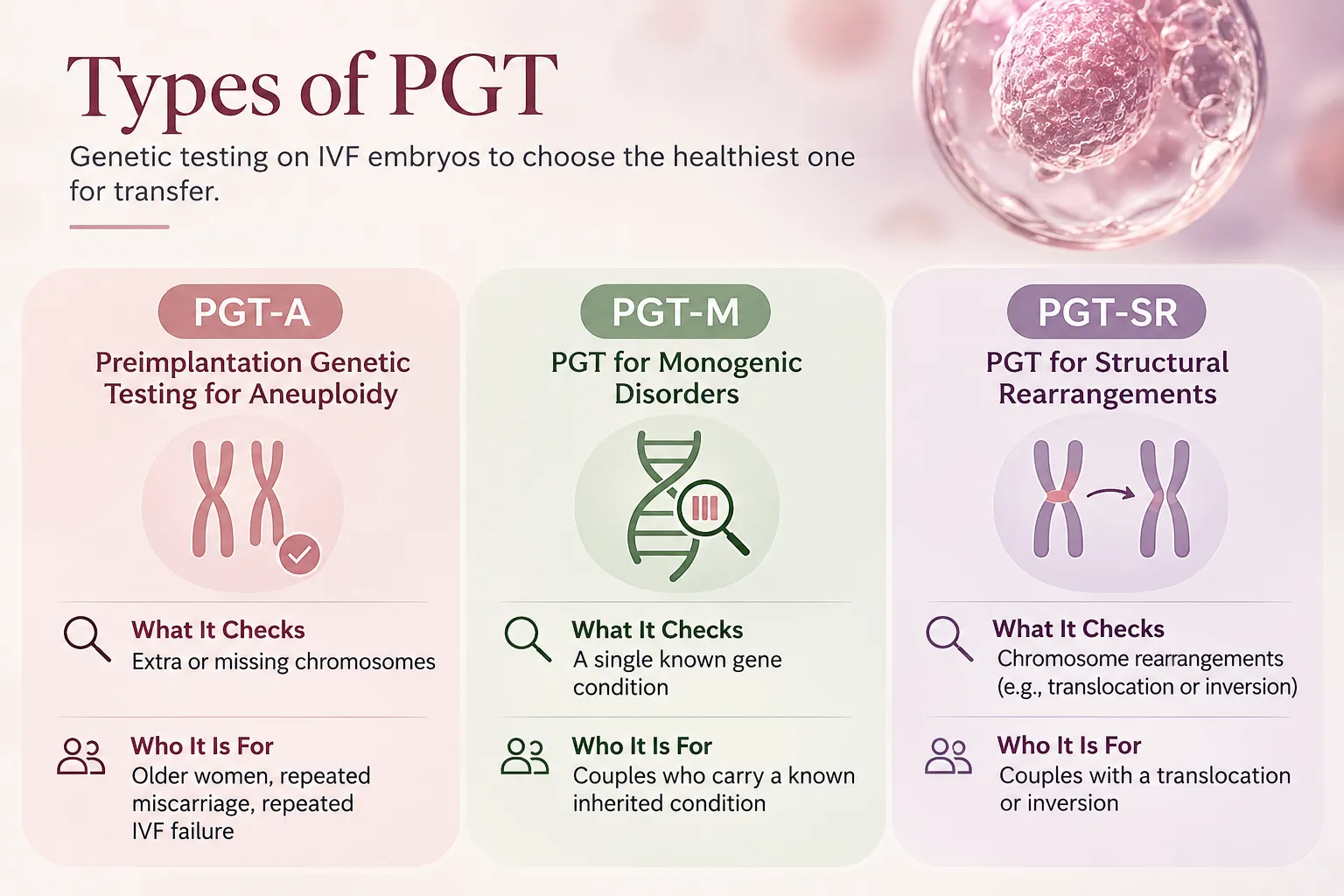
There are three types of PGT. Each answers a different question.
| Test Type | Description |
|---|---|
| PGT-A | A normal embryo has 46 chromosomes. When an embryo has too many or too few, it may fail to implant or end in miscarriage. A PGT-A test in Kondapur, Hyderabad looks for these errors so that a chromosomally normal embryo can be chosen. |
| PGT-M | If you or your partner carry a known inherited condition, such as thalassemia or cystic fibrosis, PGT-M checks whether the embryo has inherited it. A test is usually designed around your family’s specific gene change, so it needs some preparation time. |
| PGT-SR | Some people carry chromosomes that have swapped or rearranged parts, even though they are healthy themselves. This can lead to embryos with missing or extra genetic material. PGT-SR helps identify embryos with a balanced or normal set. |
Who Needs Embryo Biopsy and PGT?
Dr. Pooja may suggest PGT if you have:
Age of 35 years or above
Two or more miscarriages
Repeated IVF failure or failed embryo transfers
A known genetic condition in the family
A previous pregnancy or child with a chromosome problem
A parent with a chromosome rearrangement
Unexplained infertility after other tests
Many couples assume PGT is for everyone doing IVF. It is not. IVF with PGT in Kondapur, Hyderabad is advised only when there is a clear reason, so you do not spend on a test that will not change your treatment.
“PGT is a tool, not a guarantee. When it is used for the right patient, it saves time, money, and a lot of emotional pain.”
– Dr. Pooja Papishetty
How Is Embryo Biopsy Performed? Step by Step
Step 1. Consultation and Genetic Counselling
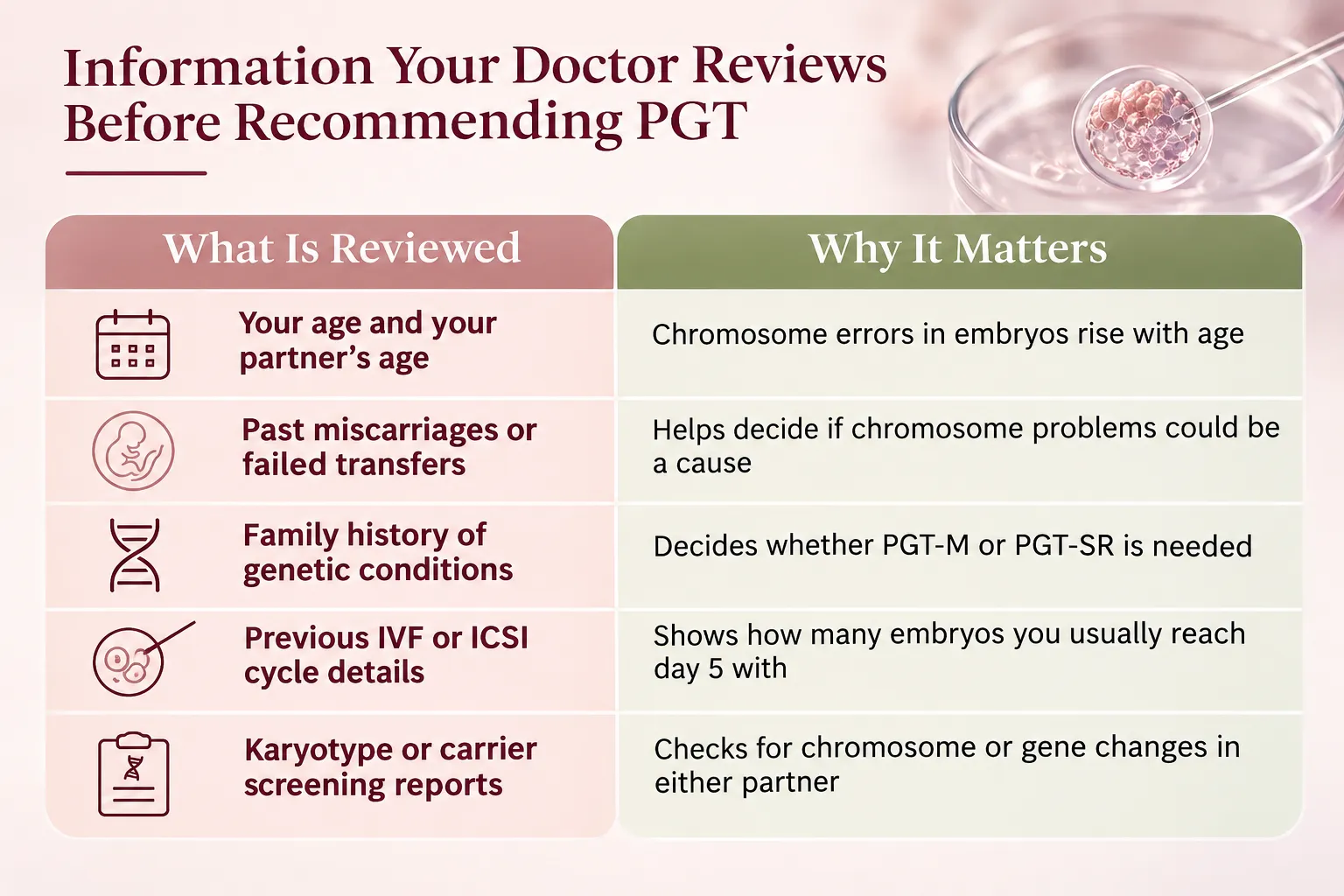
Dr. Pooja reviews your history, age, previous cycles and reports. She explains what PGT can and cannot tell you.
Step 2. IVF Stimulation and Egg Retrieval
You take hormone injections to grow several eggs. The eggs are then collected under short anaesthesia. This part is the same as in a regular IVF treatment cycle.

Step 3. Fertilisation by ICSI
In most PGT cycles, a single sperm is injected into each egg through ICSI treatment. This avoids extra sperm DNA sticking to the embryo and affecting the test result.
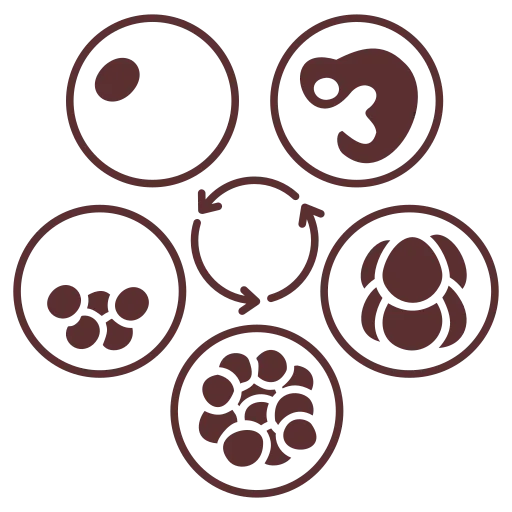
Step 4. Embryo Culture to Day 5 or 6
Embryos grow in the lab until they reach the blastocyst stage. Not every embryo gets there, which is normal.

Step 5. Embryo Biopsy
A trained embryologist uses fine instruments, and often a laser, to remove a few trophectoderm cells from each blastocyst. This takes only a few minutes per embryo.

Step 6. Freezing (Vitrification)
Every biopsied embryo is frozen right away. This gives time for the test results without any harm to the embryo.
Step 7. Genetic Analysis
The cell samples are tested using a method called next-generation sequencing (NGS). Results usually take about one to two weeks.

Step 8. Results and Frozen Embryo Transfer
Dr. Pooja explains the test results in simple terms. Based on the findings, a suitable embryo is selected for transfer in a subsequent cycle.
IVF With PGT vs IVF Without PGT
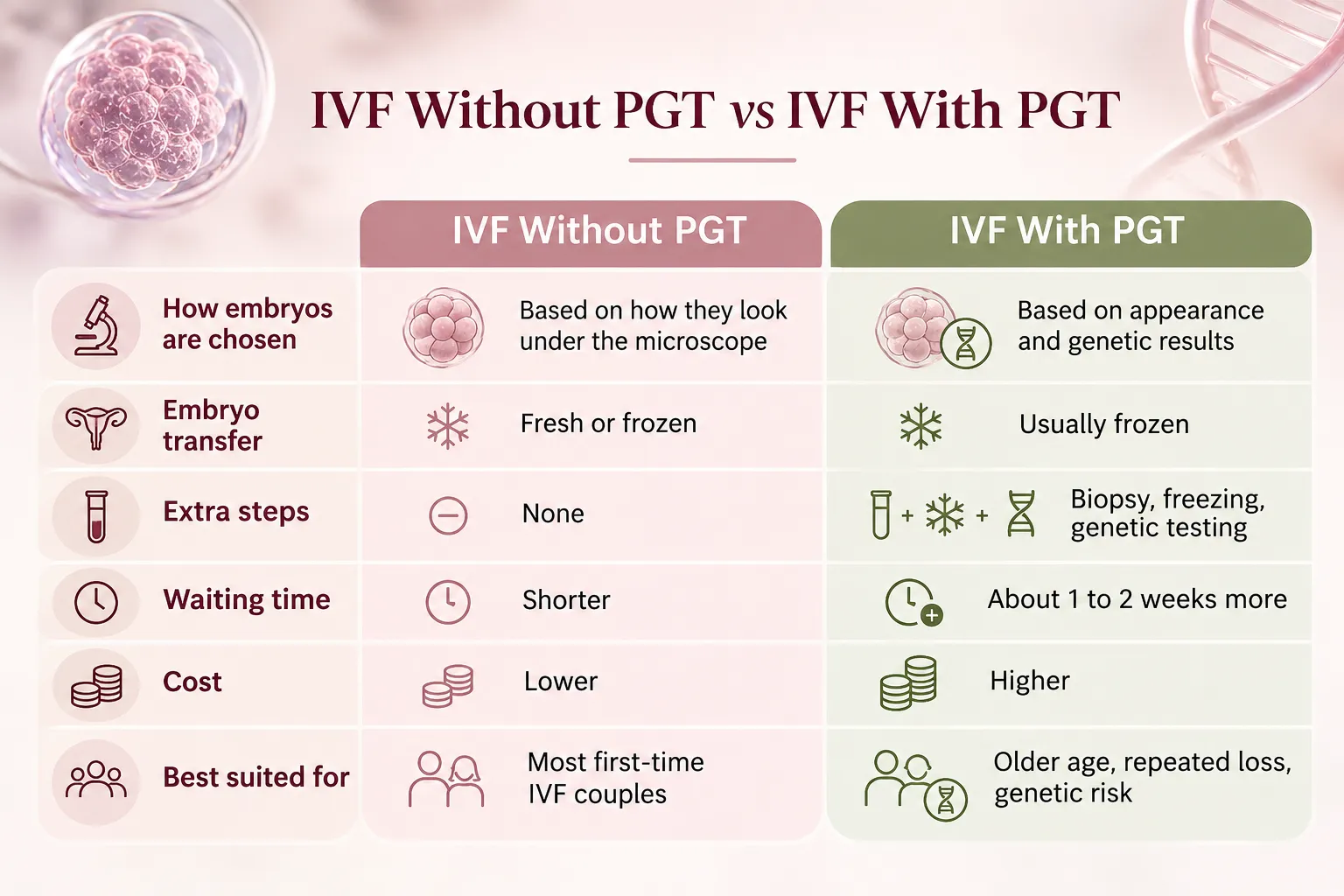
Looks alone cannot tell us if an embryo has the right number of chromosomes. A good-looking embryo can still be abnormal. That is the gap PGT is meant to fill.
Ready to take the guesswork out of your next embryo transfer?
Let’s plan it together.
Embryo Biopsy and PGT Success: What You Should Know
PGT helps you choose a chromosomally normal embryo. It does not guarantee a pregnancy. Here is what to keep in mind.
- The chance of chromosome errors in embryos rises with age. After 40, more than half of embryos may be affected.
- PGT is most useful for older women, repeated miscarriage, and known genetic risk. For younger women with many good embryos, the benefit is less clear.
- Some patients may find that none of their embryos are normal. This is hard to hear, but it can save you from a failed transfer.
- Some embryos show mixed results (mosaic). Dr. Pooja discusses these case by case.
- PGT-A checks chromosome numbers. It does not test for every possible genetic condition.
- When done by trained embryologists, the biopsy has a very low risk to the embryo.
PGT is never used to choose the baby’s gender. Sex selection is against the law in India.
Doctor Quote 3
“The report is not a verdict on you. It is information that helps us plan your next step with more confidence.” – Dr. Pooja Papishetty, Matrika Fertility and Laparoscopic Centre
Embryo Biopsy Evaluation with Dr. Pooja Papishetty
What Is Reviewed in the Evaluation
What You Can Expect from the Visit
- A clear explanation of what PGT can and cannot tell you
- A discussion of which test type, if any, fits your history
- Honest guidance if PGT is unlikely to change your treatment
- Time to ask questions before you decide anything

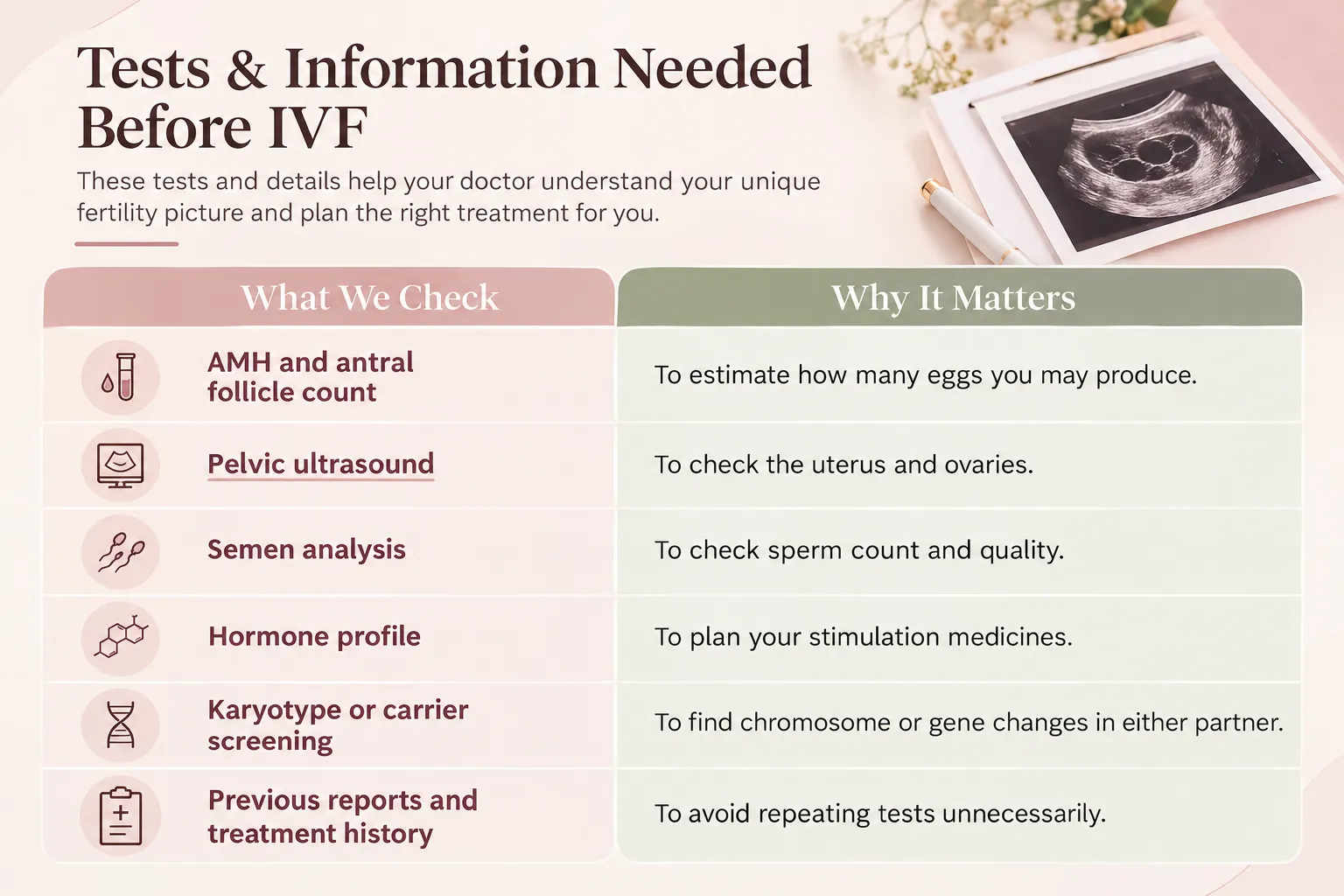
Tests Done Before Embryo Biopsy
A few checks help plan your cycle properly.
Not sure if your embryos need testing at all?
Let’s look at your history together and find out.
Frequently Asked Questions
1. Is embryo biopsy safe for the baby?
Cells are taken from the outer layer that forms the placenta, not from the baby-forming part. In experienced hands, the risk to the embryo is very low.