
PMOS, or Polycystic Ovary Syndrome, affects nearly 1 in 5 women of reproductive age in India. Irregular periods. Stubborn weight. Acne that refuses to settle. And right at the centre of it all – a quiet worry about whether having a baby is still on the table.
Most couples who walk into Matrika Advanced Fertility and Laparoscopic Centre, a trusted IVF Centre in Kondapur, Hyderabad, arrive with the same question: Will PMOS stop me from becoming a mother? The short answer is no. The longer one depends on a few moving parts, which is exactly what this blog will break down.
“PMOS is one of the most treatable causes of infertility I see in my practice. The problem isn’t that pregnancy isn’t possible – the problem is that most women are not given a clear, stepwise plan. Once that plan is in place, the outcomes are very good.” – Dr. Pooja Papishetty, IVF Specialist, Kondapur, Hyderabad
How Does PMOS Affect Fertility?
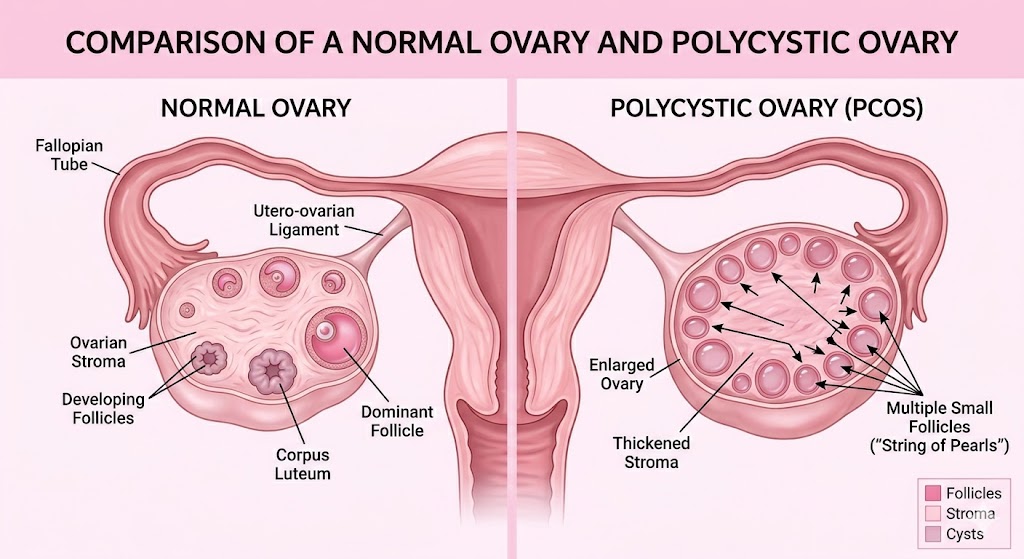
PMOS disrupts ovulation. That’s the core issue. The ovaries hold plenty of eggs – often more than average – but they don’t mature and release the way they should each month. No ovulation, no egg, no chance of fertilisation that cycle.
A few things tend to be going on under the hood:
- Hormonal imbalance – higher androgens and insulin resistance interfere with normal follicle development
- Irregular cycles – periods every 40, 60, or 90 days make it almost impossible to time conception
- Poor egg release – multiple small follicles form but none becomes the dominant ovulating egg
- Endometrial issues – irregular shedding can affect implantation later on
Here’s the part most blogs miss. AMH levels in PMOS women are often very high, sometimes above 6 ng/mL. This sounds like good news, but it actually signals a clutter of immature follicles, not a fertility advantage.
Can You Conceive Naturally with PMOS?
Yes. Many women with PMOS conceive without any medical help, especially in their late twenties when egg quality is still strong. The trick is identifying when ovulation actually happens – which in PMOS can be unpredictable.
Natural conception is more likely when:
- Periods come every 35 days or less, even if not perfectly regular
- BMI is within a healthy range or showing steady improvement
- Insulin resistance is being managed
- The male partner’s semen analysis is normal
- The woman is under 32
Lifestyle Changes That Genuinely Help
This is one area where the science is unambiguous. A 5 to 10% reduction in body weight can restore ovulation in about 60% of PMOS women. Diet built around low glycaemic index foods, daily 30-minute movement, and sleep that doesn’t dip below 7 hours – these aren’t soft suggestions, they’re clinical interventions.
When Should PMOS Patients Consider Fertility Treatment?
If a couple has been trying for 12 months under 35, or 6 months over 35, without success – that’s the threshold. With PMOS, the wait is often shorter because the irregular cycles themselves are the problem.
Step 1 – Ovulation Induction
Tablets like Letrozole or Clomiphene help the ovaries release an egg on a predictable day. About 70% of PMOS women ovulate on Letrozole, and 30 to 40% conceive within 6 cycles.
Step 2 – IUI with Ovulation Stimulation
When ovulation is induced but conception isn’t happening, IUI is the next reasonable step. Sperm is washed and placed directly inside the uterus on the day of ovulation, cutting out timing guesswork. IUI vs IVF – the difference matters and the order matters more.
Step 3 – IVF
If 3 IUI cycles fail, or if there are additional factors like blocked tubes, severe insulin resistance, or male infertility, IVF moves into view.
Who Should Choose ICSI?
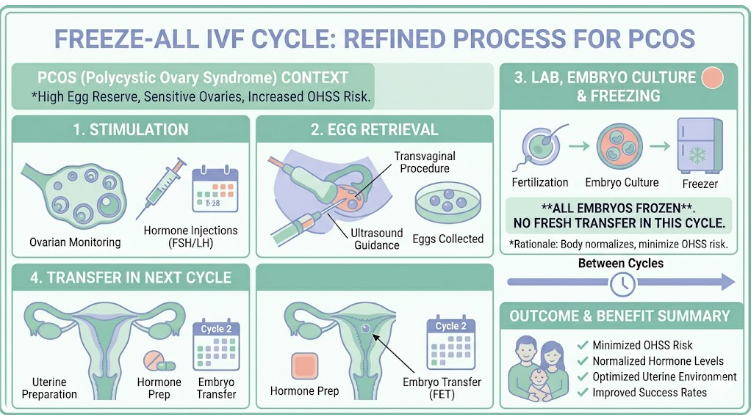
Yes, and in fact PMOS women often respond very well to IVF – sometimes too well. The challenge is that ovaries packed with follicles can over-respond to stimulation medication, leading to Ovarian Hyperstimulation Syndrome (OHSS). A careful protocol prevents this.
| Factor | PMOS Patients | Non-PMOS Patients |
Eggs Retrieved
| 15–25+ | 8–12 |
| OHSS Risk | Higher | Standard |
| Embryo Quality | Variable | More consistent |
| Success Rate (Under 35) | 50–60% per cycle | 45–55% per cycle |
| Preferred Protocol | Antagonist + freeze-all | Standard agonist/antagonist |
The freeze-all strategy – where embryos are frozen and transferred in a later cycle – has become standard for PMOS by Dr. Pooja Papishetty. It allows hormones to settle, drops OHSS risk near zero, and frozen embryo transfer success rates now match or beat fresh transfers
PMOS, Miscarriage, and Long-Term Pregnancy Care
PMOS pregnancies carry a slightly higher risk of miscarriage, gestational diabetes, and pre-term delivery. This is not meant to alarm – it’s meant to inform. With regular monitoring, the vast majority of these pregnancies progress healthily to term.
Pre-conception care matters. Vitamin D, folic acid, and metformin where indicated are usually started 3 months before any treatment cycle. Thyroid and prolactin levels are checked. Once pregnancy is confirmed, early scans and slightly tighter follow-up reduce most risks meaningfully.
Why Choose Dr. Pooja Papishetty for Your PMOS Pregnancy Journey?
PMOS pregnancy isn’t about one magic treatment. It’s about getting the order right – lifestyle first, then ovulation induction, then IUI, then IVF only when it’s actually needed. At Matrika Advanced Fertility and Laparoscopic Centre, couples aren’t rushed into IVF before simpler options get a fair chance. And when IVF is right, the antagonist plus freeze-all protocol keeps OHSS risk near zero, which matters most for PMOS women.
Dr. Pooja Papishetty builds protocols around your specific hormone profile, not a template, with careful pre-conception planning and monitoring throughout. For PMOS, the right plan from the start is what turns a frustrating wait into a clear path forward.
Frequently Asked Questions
Can I get pregnant with PMOS without medication?
Yes, especially with weight management, regular ovulation, and tracking fertile days.
Does PMOS affect egg quality?
Egg quantity is usually normal or high, but quality can vary, especially after age 35.
How long should I try naturally before seeing a fertility doctor?
Six months if your cycles are highly irregular, twelve months if cycles are predictable.
Is IVF more successful for PMOS women?
Yes, success rates are often slightly higher because more eggs are retrieved per cycle.
Can PMOS go away after pregnancy?
Symptoms often improve post-pregnancy, but PMOS itself is a lifelong metabolic condition.
References:
- American College of Obstetricians and Gynecologists – PMOS Management
- NIH – Polycystic Ovary Syndrome and Reproductive Outcomes
- ESHRE International Evidence-Based Guideline on PMOS
Disclaimer: The information shared in this content is for educational purposes only and not for promotional use.