
If you have been searching for fertility treatments online, you have probably come across these three terms – IVF, ICSI, and IUI. And if they all sound similar, you are not alone.
Most couples who walk into Matrika Advanced Fertility and Laparoscopic Centre – a trusted IVF centre in Kondapur, Hyderabad – have the same question: What is the difference between these treatments? And more importantly, which one do I actually need?
This blog will answer both. In simple, clear language – no confusing medical jargon.
What Are IVF, ICSI, and IUI? (A Simple Overview)
All three are fertility treatments that help couples conceive. But they work in very different ways and are used for very different situations.
Here is a quick summary before we go deeper:
- IUI (Intrauterine Insemination) – A simple, low-intervention procedure where prepared sperm is placed directly into the uterus.
- IVF (In Vitro Fertilisation) – Eggs and sperm are combined outside the body in a lab. The resulting embryo is then transferred to the uterus.
- ICSI (Intracytoplasmic Sperm Injection) – A technique used inside IVF where a single sperm is injected directly into an egg. Used mainly when male infertility is a factor.
“When a couple comes to me asking which treatment is right for them, the first thing I do is listen. Their history, their tests, and their situation together tell me the answer. No two fertility journeys are the same.” – Dr. Pooja Papishetty, IVF Specialist, Kondapur, Hyderabad
How Does Each Treatment Work? (Step by Step)
How IUI Works
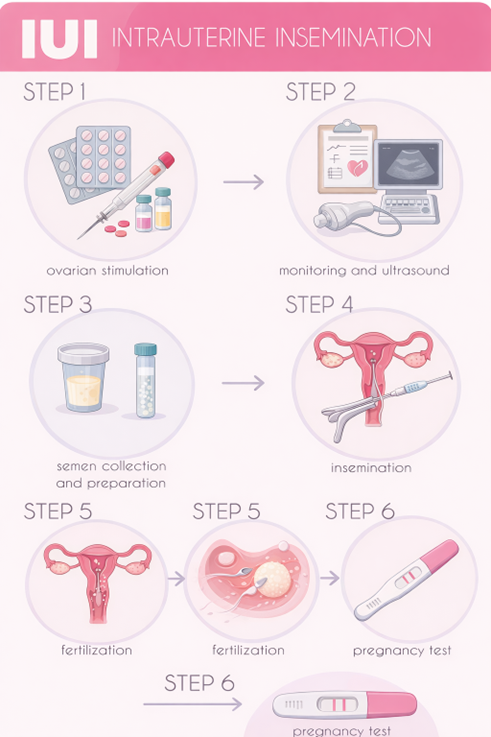
IUI is the simplest of the three. Here is what happens:
- The woman may take mild fertility medications to stimulate ovulation.
- The doctor monitors follicle growth through ultrasound scans.
- A semen sample is collected, washed, and prepared in the lab to concentrate healthy sperm.
- At the time of ovulation, the prepared sperm is inserted into the uterus through a thin catheter.
- The whole procedure takes about 5 to 10 minutes and is usually painless.
- A pregnancy test is done 14 days later.
How IVF Works
IVF involves more steps and takes about 3 to 4 weeks per cycle. Here is how it works:
- Ovarian stimulation – Injectable hormones are given to encourage the ovaries to produce multiple eggs.
- Follicular monitoring – Regular ultrasounds and blood tests to track how the eggs are growing.
- Egg retrieval – Eggs are collected under mild sedation. It takes about 20 to 30 minutes.
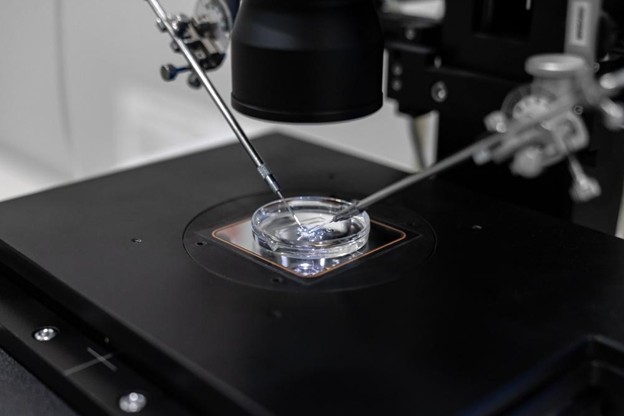
- Fertilisation in the lab – Eggs and sperm are placed together in a lab dish and fertilisation is monitored.
- Embryo development – Embryos are observed for 3 to 5 days.
- Embryo transfer – The best-quality embryo is placed back into the uterus.
- Pregnancy test – Done 14 days after the transfer.
How ICSI Works
ICSI is not a separate treatment from IVF. It is a technique used during the fertilisation step of IVF.
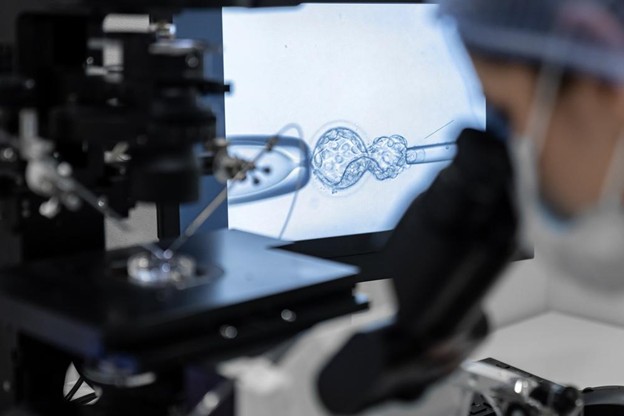
Instead of placing eggs and sperm together and letting fertilisation happen naturally, the embryologist picks a single healthy sperm under a high-powered microscope and injects it directly into the egg.
This is especially useful when:
- Sperm count is very low
- Sperm motility (movement) is poor
- Sperm morphology (shape) is abnormal
- Previous IVF cycles had poor or failed fertilisation
- Sperm is retrieved surgically through TESA or PESA
IVF vs ICSI vs IUI - Key Differences at a Glance
| Factor | IUI | IVF | ICSI |
| Procedure Type | Sperm placed in uterus | Egg + sperm combined in lab | Single sperm injected into egg (inside IVF) |
| Invasiveness | Minimal – no sedation needed | Moderate – sedation for egg retrieval | Same as IVF |
| Who It Suits | Mild or unexplained infertility | Blocked tubes, low AMH, failed IUI | Male factor infertility, failed fertilisation |
| Approx. Cost (Hyderabad) | Rs. 8,000 – Rs. 15,000 per cycle | Rs. 1.2L – Rs. 2.5L per cycle | Rs. 1.5L – Rs. 2.8L per cycle |
| Success Rate Per Cycle | 10 – 20% | 35 – 50% (under 35 years) | Similar to IVF, higher for male factor |
| Duration Per Cycle | 2 – 3 weeks | 4 – 6 weeks | 4 – 6 weeks (same as IVF) |
| Lab Involvement | Minimal (sperm preparation only) | Full embryology lab | Full embryology lab + microinjection |
Who Should Choose IUI?
IUI is a good starting point for couples who have not been trying for too long and do not have any major structural or male factor problems.
IUI is typically recommended when:
- Infertility is unexplained and the woman is under 35
- There is mild male factor infertility – slightly low sperm count or motility
- Cervical mucus is making it difficult for sperm to reach the egg
- Ovulation is irregular but responds well to fertility medication
- The woman has at least one open fallopian tube
- Donor sperm is being used
IUI is not usually recommended if:
- Both fallopian tubes are blocked
- Sperm count is very low or there is no sperm in the ejaculate (azoospermia)
- The woman has low ovarian reserve (low AMH)
- Endometriosis is severe
- 3 or more IUI cycles have already failed
Most doctors recommend trying 2 to 3 IUI cycles before moving to IVF, depending on the couple’s age and diagnosis.
Not sure if IUI is right for you? Book a consultation with Dr. Pooja Papishetty at Matrika Fertility, Kondapur, Hyderabad
Who Should Choose IVF?
IVF is the most effective fertility treatment available today. It is recommended when simpler treatments have not worked, or when the diagnosis makes it the best first choice.
IVF is recommended when:
- Fallopian tubes are blocked or damaged
- Ovarian reserve is low (low AMH or low antral follicle count)
- Endometriosis is affecting fertility
- Multiple IUI cycles have already failed
- The woman is over 38 and time is an important factor
- Recurrent miscarriages need to be investigated with preimplantation genetic testing (PGT)
- Unexplained infertility has not responded to other treatments
IVF gives the doctor more control over each step of the fertilisation and embryo development process. This means better monitoring and a higher chance of identifying the exact problem.
Who Should Choose ICSI?
ICSI is not a standalone procedure – it is used alongside IVF. So when we say someone should choose ICSI, we really mean IVF with ICSI.
ICSI is specifically recommended when:
- Sperm count is very low (severe oligospermia – below 5 million per ml)
- Sperm motility is poor (less than 10% motile sperm)
- Sperm morphology is severely abnormal
- There is no sperm in the ejaculate (azoospermia) and sperm needs to be retrieved surgically via TESA or PESA
- Previous IVF cycles had low or failed fertilisation
- Sperm DNA fragmentation is high
- Frozen or thawed sperm is being used
“Male infertility is responsible for about 40% of infertility cases. Yet it remains the most under-discussed topic. ICSI has been a game changer for many couples who were told they had very little hope.” – Dr. Pooja Papishetty, Fertility Specialist, Kondapur, Hyderabad
Can IVF and ICSI Be Done Together?
Yes – and this is one of the most common sources of confusion among patients.
ICSI is performed inside an IVF cycle. When a doctor recommends IVF with ICSI, it means:
- The eggs are retrieved exactly the same way as in regular IVF
- Instead of mixing eggs and sperm in a dish, the embryologist selects one healthy sperm and injects it directly into each egg
- After fertilisation, the rest of the IVF process continues the same way – embryo culture, monitoring, and transfer
In many Indian fertility clinics today, ICSI is used in a large number of IVF cycles even when sperm quality is normal – because it gives the embryologist more precision and control over fertilisation.
At Matrika Fertility in Kondapur, Dr. Pooja Papishetty evaluates each case individually and decides whether standard IVF fertilisation or ICSI is better suited for that couple.
Success Rates - IUI vs IVF vs ICSI in India
| Treatment | Age Group | Approx. Success Rate Per Cycle | Cumulative Rate (3 Cycles) |
| IUI | Under 35 | 15 – 20% | 40 – 50% |
| IUI | 35 to 38 | 10 – 15% | 25 – 35% |
| IUI | Over 38 | Less than 10% | Less than 25% |
| IVF | Under 35 | 45 – 55% | 70 – 80% |
| IVF | 35 to 38 | 30 – 40% | 55 – 65% |
| IVF | Over 40 | 15 – 20% | 30 – 40% |
| ICSI (inside IVF) | Under 35 with male factor | 45 – 55% | Similar to IVF |
| ICSI (inside IVF) | All ages, failed fertilisation | Improves fertilisation rate by 20 – 30% | Depends on individual case |
Cost Comparison - IUI vs IVF vs ICSI in Hyderabad
| Treatment | What Is Usually Included | Approximate Cost Per Cycle |
| IUI | Sperm preparation + insemination procedure | Rs. 8,000 – Rs. 15,000 |
| IUI with Ovulation Induction | Medication + monitoring + IUI | Rs. 15,000 – Rs. 25,000 |
| IVF (Basic) | Stimulation + egg retrieval + fertilisation + embryo transfer | Rs. 1.2L – Rs. 1.8L |
| IVF + ICSI | All IVF steps + ICSI technique | Rs. 1.5L – Rs. 2.5L |
| IVF + ICSI + Embryo Freezing | Above + vitrification of extra embryos | Rs. 1.8L – Rs. 2.8L |
| Frozen Embryo Transfer (FET) | Thawing + transfer of frozen embryo | Rs. 30,000 – Rs. 60,000 |
| TESA / PESA (surgical sperm retrieval) | Sperm extraction under local anaesthesia | Rs. 15,000 – Rs. 30,000 |
What Does Dr. Pooja Papishetty Recommend?
| If Your Situation Is… | Dr. Pooja Would Typically Recommend… |
| Unexplained infertility, under 35, open tubes, normal semen | IUI for 2 to 3 cycles first |
| Mild male factor, good ovarian reserve | IUI with ovulation stimulation |
| Blocked tubes, failed IUI, low AMH | IVF |
| Low sperm count, poor motility, or no sperm in ejaculate | IVF with ICSI |
| Previous IVF with poor fertilisation | IVF with ICSI |
| Over 38 with declining egg reserve | IVF directly – time is important here |
| Genetic concerns or recurrent miscarriage | IVF with ICSI + Preimplantation Genetic Testing (PGT) |
Questions to Ask Your Doctor Before Starting Treatment
Walking into a fertility consultation can feel overwhelming. Here are some questions worth asking – they will help you understand your situation better and make a more confident decision.
- Based on my test results, which treatment do you recommend and why?
- What is my realistic success rate for this treatment at my age?
- How many cycles should we try before reassessing the plan?
- What is the full cost, including medications and monitoring visits?
- Should we freeze extra embryos and what does that cost?
- Are there any lifestyle changes that could improve our chances?
- What happens if this cycle does not work – what is the next step?
At Matrika Fertility in Kondapur, Hyderabad, the first consultation with Dr. Pooja Papishetty is a dedicated conversation – not a rushed appointment. You will get clear answers to all your questions before any treatment begins.
Frequently Asked Questions
1. What is the difference between IVF and ICSI?
2. Is ICSI better than IVF for male infertility?
3. How many IUI attempts should I try before moving to IVF?
4. What is the success rate of IUI, IVF, and ICSI in India?
5. Can I choose between IVF and ICSI, or does the doctor decide?
References
- Indian Council of Medical Research (ICMR) – National Guidelines for Accreditation, Supervision, and Regulation of ART Clinics in India – https://main.icmr.nic.in
- European Society of Human Reproduction and Embryology (ESHRE) – ICSI Guidelines – https://www.eshre.eu
- IVF Success Rates in India 2026 – https://drhrishikeshpai.com/blog/what-is-ivf-success-rate-in-india-2026/
Disclaimer: The information shared in this content is for educational purposes only and not for promotional use.