
IUI Treatment in Kondapur, Hyderabad
IUI treatment – Intrauterine Insemination – is often the first step forward for couples who have been trying to conceive without success. It is a simple, low-intervention procedure, and for many couples, it is all they need.
At Matrika Fertility and Laparoscopic Centre, one of the trusted IUI centres in Kondapur, Hyderabad, Dr. Pooja Papishetty evaluates each couple carefully before recommending IUI. The goal is always to find the right treatment – not the most aggressive one.
If you have been wondering whether IUI is the right option for you, this page will answer your questions honestly.
“IUI is not a last resort – it is often the right first step. I always tell my patients: start simple. If IUI is appropriate for your case, there is no reason to jump straight to IVF. Let the diagnosis guide the plan.” – Dr. Pooja Papishetty, Fertility Specialist, Kondapur, Hyderabad
Not sure if IUI is right for you? Let Dr. Pooja review your case and give you a clear answer.
What is IUI Treatment?
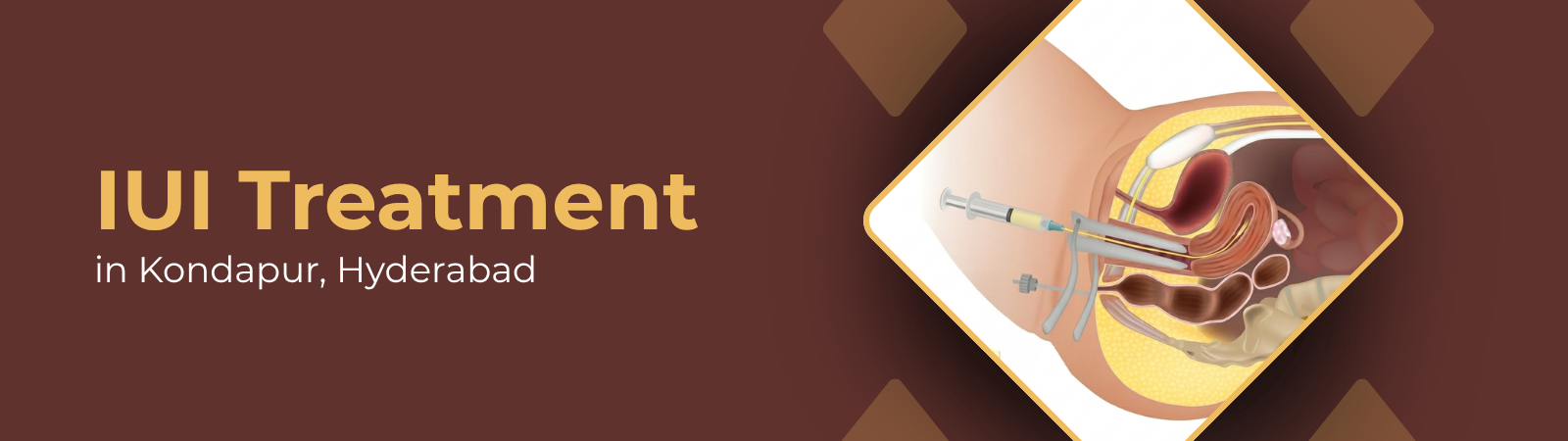
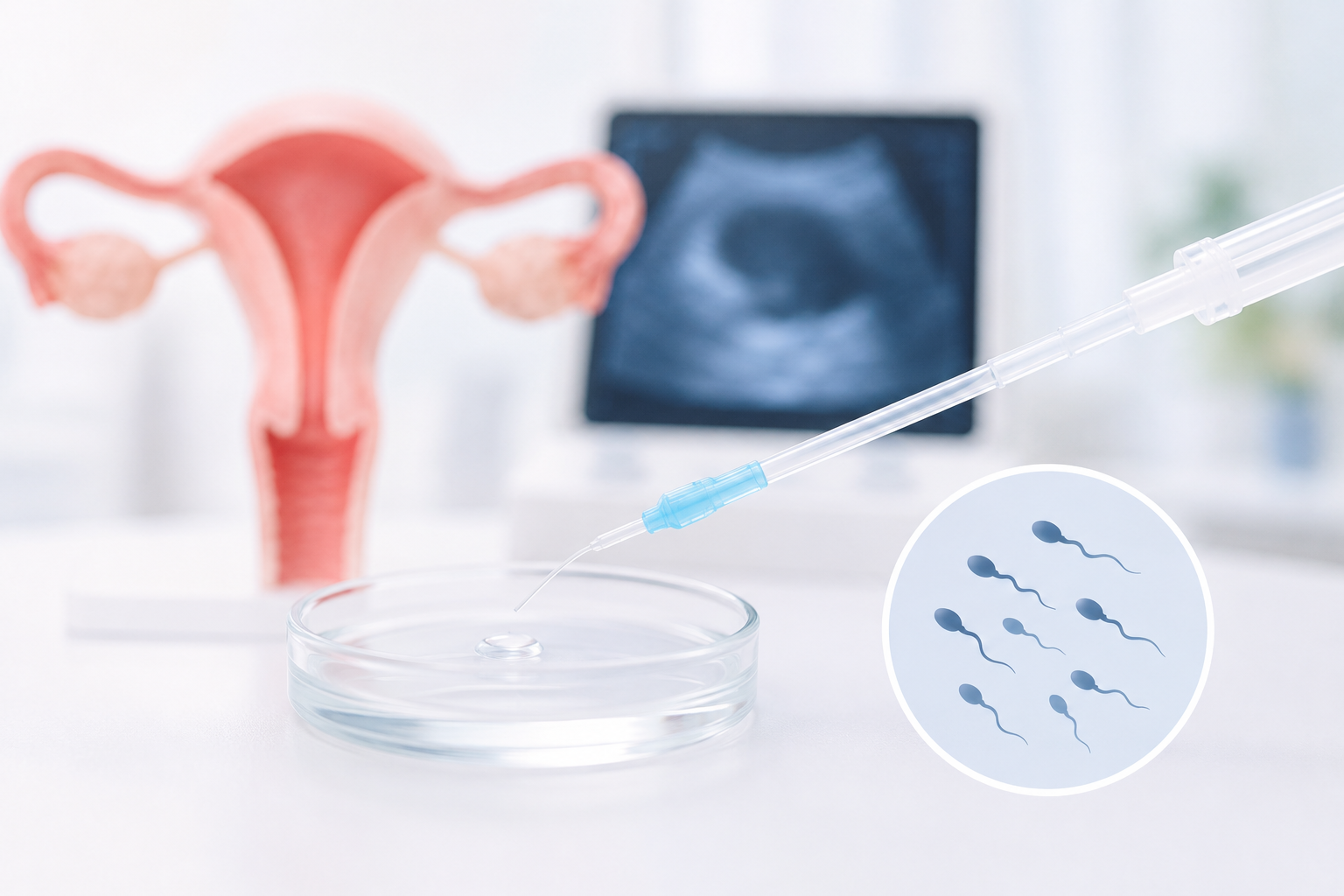
IUI stands for Intrauterine Insemination. In simple terms, it means placing processed sperm directly into the uterus – at the exact time when the woman is ovulating.
Normally, sperm has to travel a long distance through the cervix and uterus to reach the egg. Many things can go wrong along the way. IUI shortens that journey significantly. It places the sperm closer to the egg, giving fertilisation a much better chance.
Here is what makes IUI different from natural conception:
- The sperm sample is collected, washed, and concentrated in the lab
- Only the healthiest and most active sperm are selected
- These are placed directly into the uterus using a thin, flexible catheter
- The whole procedure takes about 10 to 15 minutes
- It is virtually painless – most women compare it to a routine gynaecological check-up
IUI is often called artificial insemination in India. It does not involve fertilisation outside the body (that would be IVF). With IUI, fertilisation still happens naturally inside the fallopian tube.
Who Needs IUI Treatment?
Dr. Pooja Papishetty recommends IUI after a thorough fertility evaluation of both partners. It is not a one-size-fits-all recommendation.
IUI works best in specific situations. Here are the most common ones:
Mild Male Factor Infertility
When the semen analysis shows a slightly low sperm count, reduced motility (how well the sperm move), or mild morphology issues (shape of sperm) – IUI can help. By concentrating the sample and removing poor-quality sperm, the procedure puts the best available sperm right where they need to be.
It is important to note that IUI is suitable for mild male infertility. Severe cases, such as very low or zero sperm count, would need a different approach such as ICSI treatment.
Unexplained Infertility in Women Under 35
Some couples go through a complete fertility workup and are told everything looks normal – yet pregnancy is not happening. This is called unexplained infertility.
For women under 35 in this situation, IUI (often combined with ovulation stimulation medication) is a very reasonable first line of treatment. It increases the chances of fertilisation without the complexity or cost of IVF.
Cervical Mucus Issues
Cervical mucus plays an important role in helping sperm reach the egg. Sometimes the mucus is too thick, or it becomes hostile to sperm – preventing them from travelling further into the uterus.
IUI bypasses the cervix entirely. The sperm is placed directly into the uterine cavity, so cervical mucus becomes irrelevant. This makes IUI a straightforward and effective solution for this specific problem.
Ovulatory Disorders Responding to Medication
Some women have irregular or absent ovulation due to conditions like PCOS and ovulation-related infertility or other hormonal imbalances.
When these conditions respond well to ovulation-inducing medications like Clomiphene or Letrozole, IUI can be timed precisely with the stimulated ovulation cycle to improve the chances of conception.
Other Situations Where IUI May Be Recommended
- Single women or same-sex couples using donor sperm
- Mild endometriosis (early stages)
- Couples where the male partner has difficulty with ejaculation due to physical or psychological reasons
- Women with a hostile cervical environment
If you are not sure whether you fall into any of these categories, a fertility consultation at Matrika Advanced Fertility and Laparoscopic Centre in Kondapur will help clarify your diagnosis.
The IUI Treatment Process - Step by Step
IUI is a short, straightforward process. But every step matters. Here is exactly what happens when you come to Matrika Advanced Fertility and Laparoscopic Centre for IUI treatment.
Step 1 – Initial Fertility Evaluation
Before IUI begins, Dr. Pooja Papishetty will assess both partners. This typically includes:
- Blood tests to check hormone levels (FSH, LH, AMH, Prolactin, Thyroid)
- A pelvic ultrasound to evaluate ovarian reserve and the uterus
- A semen analysis for the male partner
- A review of your complete medical history and any previous treatments
This step ensures IUI is the right choice – and that it is performed at the right time.
Step 2 – Ovulation Monitoring or Stimulation (if needed)
Timing is everything in IUI. The procedure must be done when ovulation is about to happen.
In some cases, Dr. Pooja will prescribe mild oral medications (like Clomiphene or Letrozole) to stimulate the ovaries and ensure at least one good egg matures. During this phase, you will have 2 to 3 ultrasound scans to monitor the growing follicle.
For women with regular cycles, natural cycle IUI (without stimulation) may also be considered.
Step 3 – Trigger Injection
Once the follicle reaches the right size, a trigger injection (HCG or Ovitrelle) is given to trigger ovulation. The IUI procedure is then scheduled precisely 36 to 40 hours after this injection.
Step 4 – Sperm Collection and Preparation
Timing is everything in IUI. The procedure must be done when ovulation is about to happen.
In some cases, Dr. Pooja will prescribe mild oral medications (like Clomiphene or Letrozole) to stimulate the ovaries and ensure at least one good egg matures. During this phase, you will have 2 to 3 ultrasound scans to monitor the growing follicle.
For women with regular cycles, natural cycle IUI (without stimulation) may also be considered.
Step 5 – The IUI Procedure
The actual IUI procedure is quick and simple.
- You lie on the examination table, similar to a routine pelvic exam
- A thin, soft catheter is gently passed through the cervix into the uterus
- The prepared sperm sample is slowly injected
- The catheter is removed
- You rest for 10 to 15 minutes and then go home
Most women feel nothing more than mild, brief cramping. The entire process takes 10 to 15 minutes.
Step 6 – The Two-Week Wait
After the procedure, you wait approximately 14 days before taking a pregnancy test. Dr. Pooja’s team will guide you on what to expect during this time and what symptoms, if any, you should watch for. If the test is positive, some couples then move into high-risk pregnancy care, particularly those with a history of complications or who are over 35.
IUI vs IVF - Which One Do You Need?
This is one of the most common questions couples ask. The answer depends entirely on your specific diagnosis.
Factor | IUI | IVF |
How It Works | Sperm placed inside the uterus; fertilisation happens naturally inside the body | Eggs retrieved from ovaries; fertilisation happens in the lab |
Invasiveness | Minimal – similar to a pelvic exam | Moderate – requires egg retrieval under sedation |
Medications | Mild oral tablets or low-dose injections | Higher dose hormone injections |
Cost | Lower cost – more affordable first step | Higher cost |
Best For | Mild male infertility, cervical issues, unexplained infertility (under 35), ovulatory disorders | Blocked tubes, low ovarian reserve, failed IUI cycles, severe male infertility, genetic testing |
Success Rate Per Cycle | 10% to 20% per cycle depending on age and diagnosis | 40% to 60% per cycle depending on age and protocol |
Number of Cycles Recommended | 3 to 4 cycles before reassessing | Usually 1 to 2 cycles to start |
Dr. Pooja Papishetty always starts with the least invasive, most cost-effective treatment that suits your diagnosis. If IUI is appropriate, she will not push you towards IVF treatment unnecessarily.
“I always explain to couples that choosing between IUI and IVF is not about which is ‘better’. It is about which is right for you right now. The diagnosis should drive the decision – nothing else.” – Dr. Pooja Papishetty, IVF and IUI Specialist, Matrika Advanced Fertility and Laparoscopic Centre, Kondapur
IUI Success Rate - What You Should Know
IUI success rates can vary quite a bit depending on a few key factors. It is important to have realistic expectations.
Typical IUI success rates per cycle:
- Women under 35 with unexplained infertility: 15% to 20%
- Women 35 to 40: 10% to 15%
- Mild male infertility cases: 10% to 15%
- With ovarian stimulation (medicated cycle): slightly higher than natural cycle IUI
Factors that affect IUI success:
- Age of the female partner (younger = higher chances)
- Quality and count of sperm after washing
- Whether ovulation was natural or stimulated
- Timing of the procedure relative to ovulation
- The specific diagnosis (cervical factor cases often respond very well)
Most fertility specialists recommend trying 3 to 4 IUI cycles before reassessing the treatment plan. If IUI has not worked after 3 to 4 cycles, IVF or ICSI may be the next step.
At Matrika Advanced Fertility and Laparoscopic Centre in Kondapur, Dr. Pooja reviews your response after each cycle and adjusts the plan if needed. You are never left wondering what comes next.
IUI Treatment Cost in Kondapur, Hyderabad
IUI is significantly more affordable than IVF. This makes it an important first option to explore before moving to more advanced treatments.
At Matrika Fertility and Laparoscopic Centre, Kondapur, the cost of IUI treatment depends on:
- Whether the cycle is natural or stimulated (with medication)
- The number of monitoring scans required
- Any additional tests or investigations before the procedure
- Whether donor sperm is being used
Dr. Pooja Papishetty and the team believe in transparent pricing. There are no hidden charges. Before you begin treatment, you will know exactly what you are paying for and why.
For an accurate cost estimate based on your specific case, book a consultation at Matrika Advanced Fertility and Laparoscopic Centre in Kondapur, Hyderabad.
Note: IUI treatment costs can vary from clinic to clinic. Always ensure the quote includes consultations, monitoring scans, sperm preparation, and the procedure itself.
Ready to take the first step? Get a personalised IUI treatment plan from Dr. Pooja Papishetty.
Why Choose Matrika Fertility and Laparoscopic Centre for IUI Treatment?
There are many fertility clinics in Kondapur and Hyderabad. Here is what makes Matrika different.
Diagnosis-first approach
Dr. Pooja Papishetty does not recommend a treatment until she fully understands your case. IUI is only recommended when it genuinely suits your diagnosis.

No unnecessary escalation
If IUI is the right option, you will not be pushed towards IVF. The treatment plan is built around what you need – not what is most expensive.

Personalised monitoring
Every IUI cycle at Matrika Advanced Fertility and Laparoscopic Centre is closely monitored with ultrasound scans. Timing is never guesswork.

Transparent pricing
You will know the complete cost before you begin. No hidden charges or surprise bills.

Experienced fertility team
Dr. Pooja Papishetty specialises in fertility treatments including IUI, IVF, and ICSI. Her team is trained to support couples at every step – medically and emotionally.
A comfortable, private environment Infertility treatment is deeply personal. At Matrika Advanced Fertility and Laparoscopic Centre, every consultation is handled with the privacy and sensitivity it deserves.
Pre-Treatment Tests for IUI - What to Expect
Before starting IUI, Dr. Pooja Papishetty will request a set of baseline investigations. These help confirm IUI is appropriate and guide the treatment plan.
For the female partner:
Test | Why It Is Done |
Hormone blood tests (FSH, LH, AMH, TSH, Prolactin) | To assess ovarian reserve and check for hormonal imbalances |
Pelvic ultrasound (transvaginal) | To evaluate the uterus and ovaries; check for fibroids, cysts, or polyps |
Hysterosalpingography (HSG) | To confirm that at least one fallopian tube is open |
Complete blood count and blood group | Routine pre-treatment baseline |
Rubella, HIV, HBsAg screening | Standard infection screening before fertility treatment |
For the male partner:
Test | Why It Is Done |
Semen analysis | To assess sperm count, motility, and morphology |
Blood group and infection screening | Routine pre-treatment baseline |
These tests are usually completed within a week. Once results are reviewed, Dr. Pooja will sit with you, explain every finding in plain language, and outline your IUI treatment plan clearly.
“Before I treat a couple, I need to understand them completely. The tests we do before IUI are not formalities – they are the foundation of a good treatment plan. The right information at the start saves couples from unnecessary cycles and unnecessary heartbreak.” – Dr. Pooja Papishetty, Fertility Specialist, Kondapur, Hyderabad
Frequently Asked Questions
Is IUI painful?
No, IUI is generally not painful. Most women describe it as mild pressure or a brief cramp – similar to a pap smear. It takes about 10 to 15 minutes and you can go home right after.
How many IUI cycles will I need?
This depends on your age and diagnosis. Most doctors recommend 3 to 4 cycles before considering further options. Dr. Pooja Papishetty will review your response after each cycle and advise accordingly.
What is the difference between IUI and IVF?
In IUI, sperm is placed inside the uterus and fertilisation happens naturally inside the body. In IVF, eggs are retrieved and fertilised in the lab. IUI is simpler, less invasive, and less expensive. It is usually tried first when the situation allows. You can read a detailed comparison on our IVF treatment page.
Can IUI be done with donor sperm?
Yes. IUI with donor sperm is a common option for single women, same-sex couples, or cases where the male partner has no viable sperm. Dr. Pooja Papishetty will guide you through the process and the legal requirements involved.
What should I do after IUI to improve my chances?
After IUI, it is best to rest for a few hours and then resume your normal routine. There is no evidence that bed rest for days improves outcomes. Avoid smoking, alcohol, and excessive heat (like saunas). Take any prescribed medications as directed. And try, as much as possible, to manage stress during the two-week wait.
Questions about IUI? Talk to Dr. Pooja Papishetty today – no question is too small.