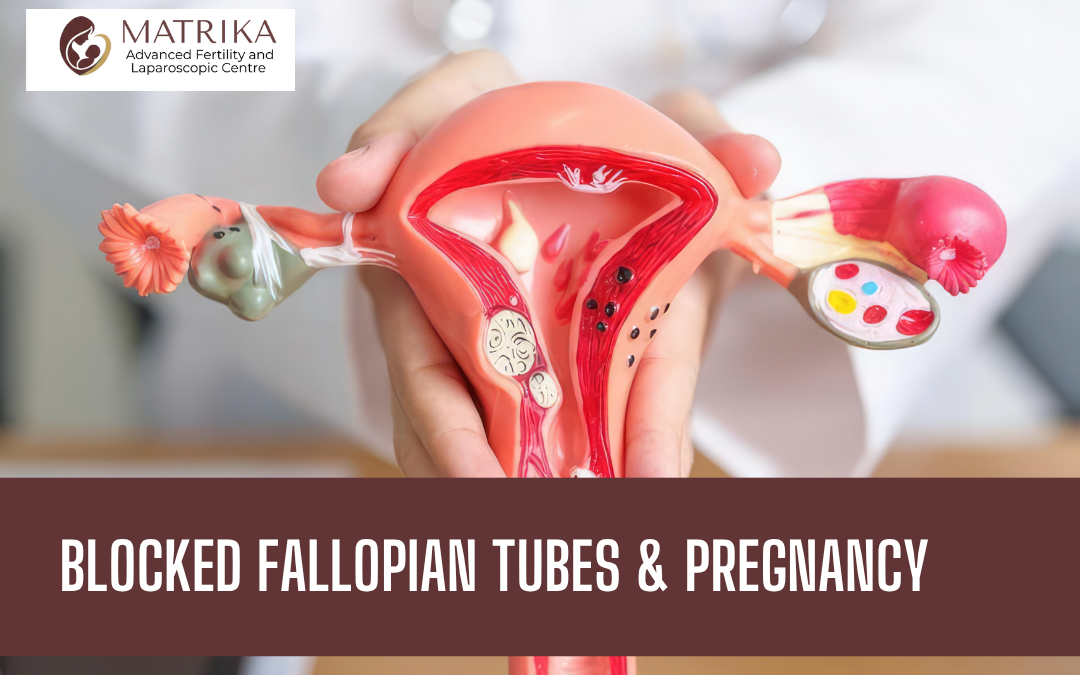
Fallopian tube blockages affect conception differently depending on severity. Complete bilateral blockage makes natural fertilisation impossible since the egg cannot reach the sperm inside the body. Partial blockages carry a separate risk where conception may occur but the embryo implants inside the tube rather than the uterus, which is a medical emergency requiring immediate intervention. IVF bypasses the fallopian tubes entirely, making it the most effective treatment option when tubal damage is confirmed.
According to Dr. Pooja Papishetty,a fertility specialist at a leading IVF Centre in Kondapur, Tubal blockage is one of the more straightforward causes of infertility to diagnose and plan around. IVF completely removes the fallopian tube from the equation.
Not sure if a tubal issue is behind your fertility struggles?
What Causes Fallopian Tube Blockages and How Are They Detected?
Cause is usually the first question, and the answer isn’t always what patients expect.
- Pelvic infections: Chlamydia runs silently for months and leaves scar tissue inside the tube that doesn’t reverse. Most women don’t know the damage is there until fertility testing confirms it.
- Endometriosis: The tube can look normal on a basic scan. Endometrial tissue growing around it keeps inflaming the area until the tube gradually stops functioning entirely.
- Prior surgery: Adhesions from an appendectomy or C-section wrap around the tube from outside. The tube is structurally intact but can’t function, and this fertility risk often goes unmentioned at the time of surgery.
- Hydrosalpinx: The blocked tube fills with fluid and that fluid drains back into the uterine cavity. Embryos don’t survive in that environment, making this the version most damaging to IVF outcomes.
An HSG scan is typically the first test done to check tube patency. Laparoscopy and hysteroscopy come in when diagnosis needs confirmation or surgical correction is being planned at the same time.
How Does IVF Work When the Fallopian Tubes Are Blocked?
The tubes aren’t involved. Not at any step.
- Stimulation: Hormone injections over 10 to 14 days grow multiple follicles at once. Ultrasound scans every few days track response and guide dosage adjustments throughout.
- Egg retrieval: Needle through the vaginal wall, ultrasound guided, patient sedated. Done in roughly 30 minutes. Most patients are surprised by how little recovery it takes.
- Embryo selection: Fertilised eggs are cultured and assessed daily. Day 5 blastocysts are preferred now because reaching that stage is itself a quality filter for stronger embryos.
- Hydrosalpinx first: Fluid-filled tubes must be removed or clipped before the IVF cycle starts. Leaving them in measurably drops implantation rates. This step doesn’t get skipped.
Tubal blockage is one of the clearest indications for IVF treatment, not a reason to delay it.
Why Choose Dr. Pooja Papishetty for IVF Treatment?
Dr. Pooja Papishetty completed her MS in Obstetrics and Gynaecology and went on to do a focused Fellowship in Reproductive Medicine at Bedi Hospital, Chandigarh, and has been managing tubal infertility, PCOS, and failed implantation cases for close to 5 years. She’s a FOGSI and IMA member, and every patient’s treatment plan is handled by her directly, not passed along.
What changes IVF results in tubal cases is what gets done before stimulation begins. Catching hydrosalpinx early, operating when needed, preparing the uterine environment properly. Dr. Pooja builds that into the initial plan, not as an afterthought mid-cycle.
Frequently Asked Questions
Can IVF work if both fallopian tubes are blocked?
Yes, IVF bypasses the tubes entirely and doesn’t need them at any stage of treatment.
Do blocked tubes affect egg quality or ovarian reserve?
No, tubal blockage doesn’t damage the ovaries or affect egg quality in most cases.
Should a hydrosalpinx be treated before starting IVF?
Yes, fluid-filled tubes must be removed or clipped before IVF to protect implantation rates.
Can blocked tubes be repaired surgically for natural conception?
In mild cases yes, but IVF gives better outcomes when tubal damage is significant.
References
- Johnson N, et al. Surgical treatment for tubal disease in women due to undergo in vitro fertilisation
- Seyam EM, et al. Comparison of pregnancy outcome between ultrasound-guided tubal recanalization and microhysteroscopic ostial dilatation in patients with proximal blocked tubes
Disclaimer: The information shared in this content is for educational purposes only and not for promotional use.